Friday 14th March, 2014
Hi
Storm Lusi is on its way heading down from the North or so the weather forecasters tell us, with strong winds and heaps of that wet stuff, that we need so much of, here in the Waikato. I do hope that we get the rain here but tell me if I'm wrong but they never seem to mention the Waikato as being in for a drenching but rather Northland, Coromandel and Hawkes Bay. We seem to get the wind which just makes matters worse and I tell you those excessive breezes in our Nursery are less than fun. Lets keep our fingers crossed that we all get a good damping and no harm comes with those heavy duty winds..
Now they happen to have named this latest cyclone heading on down, after my sweet little (large) Scotty Lucy and she is hardly dramatic in energy. Those short 20 cm legs don't take her anywhere in a hurry and she manages to survey the world at her level albeit very aloof...... but only at her height unless she can manage to get right up there on the arm of the couch and survey from a normal dogs height.
The Roses of Winter....New seasons Camellias are in As a nursery we do specialize in
roses but I had never heard the expression the rose of winter being referred to camellias before but there it was, put out there by Wikipedia. Seems appropriate for a nursery that specializes in roses to be a specialist in the roses of winter as well.
Camellias are native to China and Japan and the the name Camellia was coined after a chappie called Georg Josef Kamel a botanist (1661 - 1716) Japonica is Latin for, from Japan. Now there are other species or cousins which are all quite well known, for instance the Sasanquas which is a name that seems to tongue tie many and another main group is the Reticulatas. Another less known group are the Hiemalis which are thought to be descended hybrids of the Sasanquas and these unlike the early flowering Sasanquas flower much later. Its the beginning of showtime for the Camellias and the first to flower are the true
species like
Microphylla and
Brevistyla. We have a few other
species like
Tsaii, Salicifolia(which incidentally means willow like foliage)
Minutifolia (tiny leaves) and of course
Sinensis (the tea Camellia) These are so different from the
Japonicas and others with typically tiny leaves and tiny white flowers and ones like Tsaii and Salicifolia will make for very handsome small evergreen trees.
Many ring up looking for a Camellia
Sasanqua not realising that this is the name of the group and that there are many of these and just to add to the confusion, some of the popular cultivars are called
Setsugekka,
Mine no Yuki and
Early Pearly.
The next up at showtime are usually the
Sasanquas which tend to flower in the early Autumn and quite often are lightly fragrant. This group of Camellias are quite similar to Japonicas but tend to be more open and with smaller green leaves and also smaller flowers though these are just generalizations.
Sasanquas are quite often hedged as they are probably some of the hardiest of the Camellias. This doesn't mean that you can't hedge other types as we have a species hybrid Camellia as a hedge in front of the old boys cottage called
Gay Baby... surprise surprise.... These cross breed Camellias often have gorgeous red coloured new growths and
Gay babys bright burgundy foliage is enough to rival
Photinia Red Robin. It must have taken its name from its flowers which are a very Gay bright cerise pink ...
I never have quite understood those that say they don't like Camellias as this group of plants are just so diverse. Its not just about those classic large green leaves and biggish flowers which is probably typical of quite a few of the
Japonicas. Now the
Japonicas are next on the list for flowering and tend to be after the Sasanquas mid to late winter with their larger and more showy flowers. These make for quite solid shrubs in the garden but could be equally hedged and are quite adaptable and hardy.
I have quite a soft spot for the Reticulatas with their huge dramatic leaves and the queens of Camellia flowers which are just huge. They can grow into quite large and open shrubs or helped into being a delightful different choice for a small evergreen tree. Don't forget that those with open flowers and stamens (boy bits) can also feed the Tui's in the early spring.
The crossbreeds or more politely called the species
hybrids and
Hiemalis are the last group to flower and are doing their thing in mid to late spring. If you put your mind to it you could probably have a Camellia of some sort nearly in flower all year around except perhaps the height of summer. On that note you could have one of any size too as Baby bear will not grow much more than a metre and there are many that level out at approx 1.2 to 1.5 metres.
Exclusive to us are a couple of cultivars, bred here in the Waikato
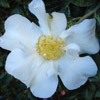
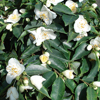
Little Gem is pretty cool with neat foliage and only grows to approx 50cm Its a hybrid and really special little Camellia that is aptly named. The miniature single flowers are pure white with just a hint of yellow on the central anthers. The flowers appear from early spring and look very dainty set against the dark green foliage. The growth habit is slow and low.
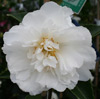
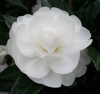
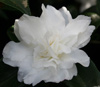
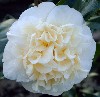
Moonlight Magic has a classic green leaf and lovely white flowers and only get to approx 1 metre Hybrid. Really lovely large semi-double blooms open from fat buds, winter-spring. The blooms have a slightly ruffled look and are highlighted by golden stamens. Handsome foliage and a nice compact habit. Plant in a semi-shaded spot in the garden or perhaps a container?
Gerbera sylvana The 'Garvinea' Gerbera range has been bred for compact habit, abundant flowering and tolerance to winter cold. Perfect for the summer garden or fabulous in containers the bright, white single daisy flowers are borne on strong stems perfect for picking. Perennial. These Normally 14.99 just $6.00 each
Hoheria sexstylosa Hoheria sexstylosa is an evergreen tree or shrub growing to 8 m tall by 6 m broad with glossy green leaves, and white flowers in summer and autumn. $24.99 now $12.99
Plagianthus regius Ribbonwood. A native tree that is worth consideration for any planting scheme. When young the interlacing branches are covered in small dainty leaves. The leaves and whole tree become more graceful upon maturity. Quite easy to grow and remarkably wind tolerant. Deciduous. $26.99 these $12.99
Coreopsis Moonbeam Masses of pretty delicate star shaped flowers form a halo around the plant. Trim after flowering to maintain a nice shape. Can be divided in spring. Great in pots $14.99 these just $6.99
Pittosporum Golfball and Goldenball Had to get more in and great buying $19.99 just $14.99 You'll love this versatile little plant which forms a dense rounded ball of fresh green foliage that seldom needs clipping. Looks fabulous group planted or makes a natural topiary specimen for court-yard containers. Grows well in sun or part shade. PVR.
Last weekend I was lucky enough to have a few hours to spend walking up Mt Karangahake with some friends and it was just stunning. Everything about the walk was fab, being out with friends, the day was just gorgeous, being in the bush and the views spectacular looking from the Thames estuary to the Waihi coastline. If you are not gardening LOL then do something special with family or friends and have a great weekend....
Cheers
Lloyd, Harry and the Wairere Team
Make it a Wairere weekend where even GNOMES know that gardening's not a drag.
Wairere Nursery
826 Gordonton Road, RD 1, Hamilton
07 824 34 30