Friday 30th January, 2015
Hi
It doesn't seem all that long ago that we were all celebrating Xmas and heralding in the New Year and by the end of next week most schools will be back in action, some back just in time to have Waitangi Day off lol.
While Its been beautiful, hot and sunny for all the holiday makers I'm sure that there are many out there that would welcome a drop of rain or two. I see that those on the TV breakfast show are suggesting that the country may get a downpour on Monday so lets all keep our fingers crossed.
It is about now that we get asked if its OK to plant at this time of year, some clients have even suggested that they will leave the plant that they purchased in its container until the Autumn to plant (this is only an option if you are prepared to water it every day, if you plant it in the ground then it should last at least a week before another watering is required).
Summer is often the time we get the opportunity to make changes in the garden ourselves and do some planting. Plastic revolutionized the plant industry enabling plants to be planted at any time of the year due to the fact that the plant has its own moist, self contained root ball.
There are a few secrets to planting in the summer though, rather techniques that make it easier despite the dryness.
The first that I would suggest is to immerse the plant into a bucket of water and wait for the air bubbles to stop bubbling. This ensure that the root ball is well and truly wet, but don't do this and leave overnight as this will starve the roots of oxygen.
Use some compost, well mixed into the planting hole. Compost will help the soil retain the moisture and while this isn't something that I recommend for winter planting is certainly beneficial for summer planting. (Too much compost in the soil in Winter can retain too much moisture in a wet season and rot new root growth).
Plant your new trees or shrubs to the same level that it is in the container and then water the new planting and surrounding soil well. A compost layer on top but not built up around the plant will also help the soil retain moisture by reducing the sun from evaporating soil moisture.
My guess is that a well planted and well watered plant may not need re watering any time from one to two weeks depending on what the type of plant is and what its water needs are.
The more root developed the plant is supporting a large and leafy top may need more water that say a less root developed plant.
The other important point is when you re-water, water well by either watering long and slow and provide one decent watering that does the job and not all these every day short bursts. I am a fan of soak hoses where watering can be long and well placed.
Harry's Tip for planting trees is to create a moat around the top of the planting to contain the water so that it soaks through and into the root ball but don't compromise your planting depth or create an area where water can sit all winter.
Watering pots. For plants with a high water requirement a saucer holding extra water sometimes helps but the danger is that you leave it there and some plants will die as they effectively drown.
Remember that all plants in pots should be watered every now and then until the water runs out of the bottom of the pot as this flushes out excess soluble salts that can cause fertilizer burns on the leaf edges
Oh My Goodness. Harry's love is growing zucchini, courgettes and Scallopini, (call them what you will) and I often joke that we live on them for at least 6 month so one learns to do many things with them and my latest trick is to combine them into a bean salad as we often have a lot of these at once as well.
The other day our good friends gave us a huge bag of delicious beans so hence this salad.
Top and tail your beans and slice them up into approx 3 cm pieces and blanche them in boiling water. I bring them to the boil and cook ever so slightly but they still need to be crunchy. Throw in slivered zucchini (I used the yellow ones for colour) at the last minute for a few seconds and then plunge the lot into cold water, drain well and pat dry
Add finely diced onion, chopped tomatoes, toasted sesame or sunflower seeds ( last nights had chopped Cashews as that was all that was in the cupboard) salt and pepper, finally add finely chopped fresh herbs like parsley, basil or whatever there is.
Make a simple dressing of lemon juice, Harrys Tarrgon flavourful olive oil and honey or golden syrup to sweeten. Toss all together and serve. This bean salad is beautiful with fresh pan fried fish.
We shared this salad with the neighbours last night and apparently the husband is now a salad convert, well maybe to my bean salad, but hey that's a start.
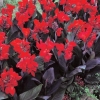
Cannas provide riots of summer colour
They are pretty, easy and hardy and are just looking gorgeous this time of the year with the added bonus that they, almost, don't get any bug or pest to cause any problems. They are tolerant of almost any garden situation from quite dry to quite wet but it is a preference that they are in the sun. Not only do they have stunning flowers but their leaves are large with some varieties having awesome colours and lend themselves to quite cool foliage effects in the garden often used for a subtropical look.
Botanically speaking they are Monocots of which corn and banana palms are examples of and its worth noting that most plants are Dicots. Cannas belong to, and are the only representative of the family Cannaceae and their close relatives are the Ginger family or Zingiberaceae.
Interesting facts Uncle Google dished up about cannas:-
Rhizomes of cannas are rich in starch, and it has many uses in agriculture. All of the plant has commercial value, rhizomes for starch (consumption by humans and livestock), stems and foliage for animal fodder, young shoots as a vegetable, and young seeds as an addition to tortillas.
The seeds are used as beads in jewellery.
The seeds are used as the mobile elements of the kayamb, a musical instrument from Reunion, as well as the hosho, a gourd rattle from Zimbabwe, where the seeds are known as hota seeds.
In more remote regions of India, cannas are fermented to produce alcohol.
The plant yields a fibre from the stem, which is used as a jute substitute.
A fibre obtained from the leaves is used for making paper. The leaves are harvested in late summer after the plant has flowered, they are scraped to remove the outer skin, and are then soaked in water for two hours prior to cooking. The fibres are cooked for 24 hours with lye and then beaten in a blender. They make a light tan brown paper.
A purple dye is obtained from the seed.
Smoke from the burning leaves is said to be insecticidal
Cannas are used to extract many undesirable pollutants in a wetland environment as they have a high tolerance to contaminants
In Thailand, cannas are a traditional gift for Father's Day.
In Vietnam, canna starch is used to make cellophane noodles known as mien dong.
Some smaller varieties:-
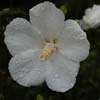
Rose of sharon's attractive and plentiful blooms make this plant fully capable of holding its own as a specimen. One's ability to shape rose of sharon also makes the shrub a prime candidate for hedges. Remember though that it is deciduous so it makes an effective privacy hedge only in summer. It could be used to achieve privacy around swimming pools, for instance.
Although naturally a multi-stemmed shrub, this plant can be trained through pruning to have one main trunk; thus some people refer to it as rose of sharon "tree." Prune in late winter or early spring, since this is one of the shrubs that bloom on the current season's growth.
Favourite summer colour arrived this morning in the form of 3 different Dahlia collections being Mystic, Dynamic and Patio. As you can see below the colours are stunning.
Patio Collection
Dynamic Collection
Mystic Collection
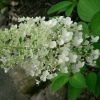
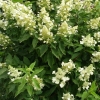
Hydrangea Paniculata Varieties
The Paniculata range of are the big show offs of the hydrangea family. Their stunning white pannicles on the lovely reaching branches make these a must have in your garden. You may have seen the Kyushu variety as standards lining the front of our admin building on your walks round our gardens. If not they are just posted on our facebook page to show off their splendor. The new Levana range are set to be hot property and may topple Kyushu as one of our favourites.
Rose Stuff
This summer heat can be hard on roses too resulting in smaller than normal sized bloom and ligher colour flowers due to the suns intensity. Watch out for mites this time of year as these pesky little blighters love hot and dry weather. Usually spotted by their damage to the foliage as they suck the green out of the leaves leaving a speckled yellowish effect. Conqueror oil may help to control these spider mites but you have to get coverage and that means spraying under the leaves and may means several close togather sprays. Otherwise use cattle drench at the rate of 1ml per litre of water.
If your roses are looking manky and untidy cut them back , feed and water them and they will be back in flower in 7 weeks (well those that do repeat)
If you are after something particular then now the time to see if we are getting it in or make that order so that you get yours. email Rosemary at backorders@wairere.co.nz
Goodness me it's another weekend already and I'm sure that its going to be a fine one with rain forecast for Monday. Lets keep our fingers crossed for that as I m sure that it will benefit all.
If you are still on holiday enjoy, otherwise have a great weekend
Lloyd, Harry and the Wairere Team
Make it a Wairere weekend where even
GNOMES know that gardening's not a drag
2015 Newsletters...