Friday 29th July, 2016
Hi
Ooohh my goodness... its been so wet... I don't think that we have had a day without rain for ages. I'm used to working in all weather but have to say that I'm hanging out for a fine day / week or so!!! The nursery is getting a tad soggy aka muddy where we do the potting and so we're thinking to put in another drain to help take the surface water away and in the dispatch shed we are going to put in a wall to make the space less prone to all the elements.
All in all its hardly been gardening weather but I have to say it, we need some fine days to get some pruning done as time is marching on. July is nearly done and dusted and August is looming and spring is just around the corner. I have always said to hold off rose pruning until the last moment here in the Waikato but it is getting close to bud burst time. However the golden rule is that you cant prune in the rain or wet as moisture spreads fungal spores. Silver leaf is a fungal infection of the rose family and can be spread or find entry sites in wet weather.
I reckon get all your fruit trees done and then move onto your roses as they do need to be done prior to leafing up.
Espaliers Cordons Oblique cordon and steps
Now I have always ooohed and aaahed of beautifully done espaliered fruit trees.. such a cool classic kind of look. I guess that its a technique developed for walled gardens that we see in the European gardening mags but its certainly got a place here too. Many sections these days are smaller and fenced which these space saving tree shapes suit perfectly. Having said that you don't just need a wall to create your own espalier but you may need a frame in which to perfect this pruning technique.
I used to prune espalier apple trees that surrounded a courtyard. The frame work consisted of well positioned and very secure square posts with taut wires between them which provided the frame work to train to. Once the tree has been trained then they can mostly hold themselves.
Another fancy name to add to our vocabulary is cordons which is where an apple or pear is trained to a single leader. I'm sure that you have all seen the pics in books or magazines where they are single leaders all on a fancy angle. I must admit I wondered why the angle, so I googled cordons and learnt that it makes for a longer stem length which in turn can produce more fruiting spurs, but a cordon can be either upright or angled and both are space saving styles.
I just have to mention steps yes apple step.. this is where you train the apple tree to be a low growing horizontal tree or step usually at around just 45cm high. These are perfect for lining a path or edging a garden. It is an excellent way to have a layered garden all catching the sun and still saving space. Imagine fan trained goosberries, with step apple in front and strawberries growing below.
IF you want to create you own espalier step or cordon, then just like a vase shape tree it will take you 3 to 5 years to get the desired shape. Start with planting a new plant. Most of the books and sites that I have looked at suggest that you cut the stem back to where you wish it to branch from. Usually around 50 to 60 cm from ground level for an espalier or around 45 cm for a step. Basically you need to cut it back hard enough to force growth from a lower level through its first growing season in your garden.
Second winter choose the growth that you need to start to tie down and keep the central leader and head this back to the next tier at approx 50 to 60 cm above the previous tier. Repeat each winter to create as many levels as you require.
Once you have tied the branches horizontally and tipped them then they should produce fruit spurs along their length which will fruit for many a year. These horizontal branches will also produce vertical growths which in the summer you may remove and/or leave some for further development. It is important to Summer prune w as this will help the development and ripening of the fruit and maintain the shape of your espalier.
The timing of when you tie down the branches into their permanent position can be important too as once they are tied in place they will become physiologically aged and further growth required for length will usually be achievable in small increments. This is because the branch that you tie down thinks it is older than it actually is and in the second year will produce fruiting spurs and upward growth rather than continuing to grow from the tip. This growth becomes the wood you either prune out in summer or keep to make a cordon of vertical or angular growth.
Other space saving options are the column trees that have a natural tendency to grow like a column rather than spread.
Blush babe, and Ballerina apples like
Waltz and
Bolero all naturally give space saving options as either dwarf standard or columnar trees. Check out our facebook posts for ideas on how
step,
cordon and
espaliered trees can enhance your space.
Apple Watch....... Cider apples
You almost want to have an orchard full of Cider or heritage apple just for their names but on a more serious note for making cider or cooking with. It would seem there is a need for cider apples for those to try their hand at making the sparkling drop and I would guess that if you grow your own it will make it all that more special, perhaps you could even grow some cordons or espaliers and get more varieties on the go.
Royal wilding Cider Apple. Another fine apple heralding from the St. Thomas district of Exeter. It came to prominence in Devon at the beginning of the 18th Century. Pale yellow (slight green tinge) with virtually no flush. Medium to large size fruit. A melting mild bittersweet. Makes a rich, pleasantly aromatic, cider. Mid season fruiting. Upright spreading tree. Deciduous.
Knotted kernal Heritage Apple. Now if you like Cider and why wouldn't you then this apple is a 'must have'. Valued for producing a slow-fermenting, full-bodied, quality 'hard' cider. The fruit are small, dark and maroon in colour with a 'bittersharp' flavour. Note this is not an eating apple. Deciduous.
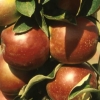
A medium sized heritage apple with green skin flushed yellow bronze. Good flavour with juicy, crisp yellow-green flesh. Leave on the tree as late as possible before picking - ripe around the end of autumn. Excellent for cider and cooking.
You can't beat
Daphne for Winter Fragrance
There is more to Daphne than the classic bush one that we all know and love....
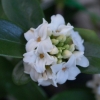
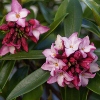
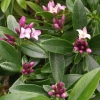
Daphne odora leucanthe is its proper name and its around in the pure white and also the pink. I often get asked which is the more fragrant bu I have to say that to me they are both really delicious.
Daphne rubra is what I would call the old original one with the semi cascading habit and the also gorgeously fragrant pink flowers. These Daphne like a morning sun position and rich free draining soil.
A newbie on the Daphne front is one called
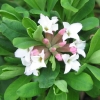
Sweet Amethyst and this one is an odora species which tells us that its going to be bushy in form... smaller more pointed leaves than our regular favourite and the flowers have a purplish overtone with pink and of course are beautifully fragrant.
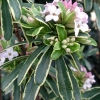
Daphne burkwoodii and Daphne burkwoodii variegata are a couple of different species from the classic Daphne and guess what they are semi deciduous or should I say semi evergreen. similar shaped flowers to classic Daphne but smaller and yes these are fragrant too!! These also are a tad fussy and like moist, rich soil and will take part shade to sun but don't like to bake.
Brand new to us
Peaonies will be arriving mid August. We have some gorgeous varieties coming and if they go out the door like they did last season then you will want to get your order in. Pre ordering is a great way to have your selection held for you so you don't miss out. Check them out on fb, so you can see the flowers in all their glory. All posted and looking delectable.
Gorgeous
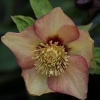
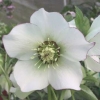
Hellebores can always be counted on to put up a superb show in your garden when everything else is snoozing. Whether planted in mass, under planting a deciduous tree, colouring a shady spot or dotted through your garden they are always nodding their heads with gorgeous colour at this time and well into spring. I have posted these on facebook as
single,
double and a
nemone centred so don't forget to look at them all before you make your choice.
Stachys byzantina Bella Grigio.... such a fancy name for Lambs ears but this is not just any lambs ear but a gorgeous lambs ear. Slim, tapered silvery leaves to about 50 cm tall culminating in spires covered in pink florets. Put this one on your must have list, we have.
Tatties and
yams are ready for planting. We have a great selection to choose from. Don't forget to put in different potato varieties so you can extend your harvesting time.
Early - Arran Banner, Cliff Kidney, Jersey Bennes, Liseta, Maris Anchor, Rocket and Swift.
Mid - Allura, Haylo, Heather, Highlander, Ilam Hardy, Karaka, Nadine, Osprey, Purple Heart, Purple Passion, Rudolph and Sebago.
Late - Agria, Desiree, Moonlight, Red King, Red Rascal, Rua and van Rosa.
Lots to do so here's hoping for a fine day or two!
Have a great weekend!
Lloyd, Harry and the Wairere Team
Make it a Wairere weekend where even
GNOMES know that gardening's not a drag.