Dare I say it ... well, we could do with a shower or two of rain ... now I'm not speaking about a weeks worth and certainly not on the weekend but hey we have had to dust off the irrigation and set a bay or two running for a couple of hours.
Well getting that irrigation going has got me started on rebuilding the whole central station that has been doing its job ( or not quite so well ) now for the last 15 to 18 years.
Its one of those jobs that you put off (been a couple of years now) and think one day I will get that sorted as the new design is much bigger than the old one and all the water pipes both in and out have to be adjusted.
The problem is that in the winter we don't need it at all and in the summer well we can't do without it and certainly not for more than a day and its one of those projects that could go either way. You know the ones.... once you have it all dismantled and then there is a different issue, well you still have to box on and get it sorted
Its this in between time of year where we can manage for a couple of days without water that I can take the system down and get stuck in and get the thing rebuilt.
You are what you eat..... Plants too !!
If you want a fabulous garden then it will need feeding. The more well fed that plants are in general, then they are more capable producing flowers fruits and leaves and fending of pests, diseases. I say that its like us ... a good diet, plenty of sleep, adequate exercise (not to much vino) and generally we don't get sick!!
Its true plants love food and at this time of year they are going through a huge growth spurt so what to feed?
Fertilisers come as slow release and instant. Instant, or quick release,
fertilisers are just that, they require rain or moisture to dissolve and then make nutrients available to the plants, like salts and trace minerals that they need... a bit like the sugar that I have in my cup of tea. It makes sense to apply it either prior to or in the rain. For instance,
instant Rose fertiliser applied at the rate of a small handful around the drip line of the plant to have ready for the spring rush. Make the amount of fertiliser is relevant to the age of the plant. Obviously a young plant will require a smaller amount as too much may scorch the roots. I will add here that its better to add a slow release fertilser to new shrubs and roses at planting time so there is no risk of burning the roots.
Never use an instant fertilser to side dress pot and tubs as it goes straight into solution and in a pot there is no room for movement if you apply too much.
Slow release fertiliser usually sustains feed for a period of time from approximately 3 months to perhaps 9 months . These formulation types don't tend to burn the roots as they don't dissolve into solution and provide a rush of salts like instant ferts. These types of ferts tend to have quickly available and also longer term Nitrogen. Slow release fertilsers are the best ones to use for pot plants, newly planted shrubs or in light sandy soils.
Organic feeds like
BioBoost and sheep pellets are always good and can be fed to your plants constantly. These ones help improve soil culture and also soil micro organisms. Blood and Bone is another natural feed that can be worked into the soil. Usually these types of food need some time to break down before they release more nutrients to the plants and so they take longer to work. Bio boost is an awesome way of adding organic food to a lawn as it comes as a granulated small pellet which will go through one of those lawn fert spreading gadgets.
Mulch layers and coarse compost like shredded bark take much longer to break down, sometime 6 months to a year but they also serve such a useful purpose like suppressing weeds and conserving moisture. They stop the sun beating down on the soil. Whenever I redo a piece of garden I always mulch it to suppress the weeds and a garden that has been composted is 10 times easier to weed than one that doesn't get fed.
A couple of other hints
Light or sandy soils usually lose minerals more quickly as the rain leaches the available nutrient through more quickly and out of reach of your plants... to remedy, incorporate more compost to increase water retention and apply fertilser more regularly or just use slow release formulations
Heavier soils tend to hang onto nutients for longer, though often these soils need help with drainage. Organic matter helps with all soils types by improving the overall soil structure.
Pseudowintera , Horopito or Pepperwood as it is otherwise known has been used by the people of New Zealand for both medicinal and culinary purposes for centuries. The active part of Horopito is polygoidal which makes the "hot taste" in peppery spices and also produces significant anti-bacterial and anti-fungal properties. It has been proven to inhibit the growth of yeast-like fungi.
Traditionally skin complaints were treated using bruised leaves that had been steeped in water or chewed. It was found to be effective against fungal infections such as Candida Albicans and ringworm as well as being great as a treatment for wounds, cuts and burns as Horopito also stimulates circulation for the skin.
In culinary terms even though Horopito's fiercely strong taste is very different to black pepper or chilli, it's dried and ground leaves can be used as their substitute both in hot and cold dishes. In very small amounts the taste can be quite refreshing and almost cooling, you may be surprised to find out that it is added to cookies and even ice creams. A tiny bit added to black tea gives a unique taste and can be nicely invigorating.
There are some quite cool clones of the pepperwood with interesting red blushed foliage and these make for great slow growing shrubs that would contrast nicely against other green leaaves or perhaps team them up with Westland Astelia.
5 Things that you need to know
1... watch out for slug and snails at this time of year. they tend to take a bite... well they rasp rather than bite. They rasp the new shoots of all your
Hostas,
Liriopes and in doing so make a hole that goes through all the layers and when those new shoots unfurl ... well you have many holes in the leaves. Once these types of plants have holes, they have them for the remainder of this season.
2... Roses fruit trees and all many of pruning needs to be attended to now! as spring or new growth is going to happen quickly with these beautiful warms days that we are having
3...feed time, as you are going around pruning and getting the garden ready for spring, feed all you plants
4...Planting new plants... check that the
potting mix in the pot is moist. you will get a variety of pots this time of year, plants that have been in the container for a while and new seasons that still have rooted into the container. Those that have been in the
container for a while run the risk of being dry as they will spring into growth quicker and use the available water especially with the sudden change in weather and hot spring days. If dry immerse into a container of water and wait for the bubbles to finish and then remove and drain. root ball will be well wet
5... always water plants in after planting. this settles the soil fines back around the roots helps compact the soil and remove air pockets and creates movement of moisture between the soil water and the root ball water.
Goblets, Tulips and cup and saucer are all terms to describe my queen of flowers ....
Magnolias
Magnolias are my fav tree. Two years ago I planted a Rimu in memory of one of my fav Aunts but as I love Magnolias I couldn't resist putting in another Magnolia tree so planted a white one called
David Clulow . I love them all but whites are my first choice demonstrated by the fact that we already have several Denudata Alba, whose name says it all, flowering white and naked, well without any leaves in sight and these are in full bloom right now!!!
I'm thinking that perhaps I will put in another white Magnolia, like
Lenneii alba as I don't have that one yet, or maybe, a Munchu Fan, Milky Way or even a Campbelli Alba.
We currently have an amazing range of these but I had an opportunity to get a few extras that I haven't seen for a while and a couple that we have had before. Atlas is a very large flower NZ hybrid and the other Manchu Fan is of course a going to be in my good books being mostly white with a blush of pink at it very base. For those that love pink then you will just have to check out the two new ones to us being Copeland court with huge cup and saucer flowers in clear pink and Kews surprise is another large flowered pink clone in gorgeous soft pink. These are just starting to bloom in the garden centre so come out and check them out!!!
Mock orange or
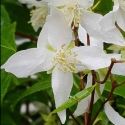
Philadelphus Attractive shrubs that have pretty whirte flowers that smell of citrus flowers hence the name mock orange. There are a few kinds being double flowers or the classic single blooms. some grow to different heights but they all have that fragrance in common '
Persimmons we managed to find some more of these beautiful fruit and these are in stock now as well. Such a great ornamental tree as well as delicious fruit.
Maramalade... I just love the stuff. I am going to have to get the old boy to teach me how to make it. he always gets it just right with the flavour and texture... Might have to save the lesson for a wet day as I making the most of all the fine ones... either out there feeding the garden or in the garden centre
Its meant to be another fine one so get that pruning done and feeding of the garden in readiness for the next drop of rain
have fun, cheers
Lloyd, Harry and the Wairere Team
Make it a Wairere weekend where even
GNOMES know that gardening's not a drag.