Our weekly email news letter. Sign up here to get them delivered straight to your email in box. See below for previous issues...
Please note that product availability and prices may have changed from when this newsletter was sent. Please check this site or phone us for current availability and pricing.
Saturday 2nd May, 2026
Hi
Too much of a good thing
Stress. Most people have it. Many people have more than they want. Some go to great lengths to avoid it. Stress is basically just a fact of life. Small amounts of stress can be beneficial and result in brain growth and boosted immunity. Too much stress though can lead to long term health problems such as reduced immunity and mental health challenges. Recently I experienced a large rush of stress outside my control and it made me stop and think about what I usually do to "de-stress". Exercise is one, reading a book, going for a walk and basically getting back into nature are all key for me. Time for me to take some deep breaths and count my blessings.
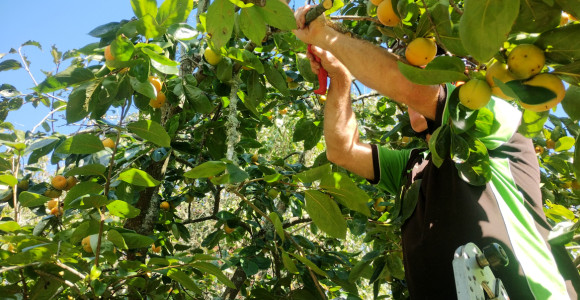
Plants experience stress in different ways too - usually to do with either a lack of, or too much, water - and that can sometimes be due to damage to their roots when transplanting (planting shock). The results are usually pretty obvious with wilted leaves, brown tips and sometimes dieback. Sometimes the stress of too much weight on a branch will cause it to crack, and unfortunately this is the time of year when many fruit trees are overloaded with ripening and ripe fruit. Keep an eye out for branches bent down under the weight of fruit; time to thin them before disaster strikes and you lose not only the fruit but the branch and possible the tree too. In the picture above you can see one of our gardeners removing some of the weight out of our persimmon tree.
Anyone for a Mandarin?
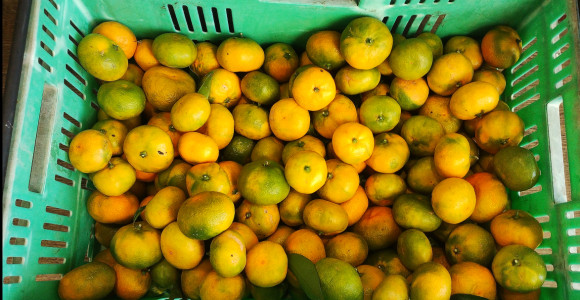
We are blessed by a variety of fruit which are all ready to be eaten RIGHT NOW. Persimmons, Feijoas, Mandarin, Oranges, Guava, Apples and Pears are all ready to be picked and devoured fresh, or in desserts or other dishes and preserves. If you call into the nursery you will notice a large tub of semi ripe looking mandarins tucked up by the shop. Unfortunately, the large Satsuma tree in our potager succumbed to its own success; It was so laden with fruit that it snapped off. All the fruit (and there was a lot) is now ready to be sampled by willing mouths.
There's been a lot of discussion about what constitutes a ripe mandarin with opinions varying wildly. In some Asian countries mandarins are eaten completely green as many love the tangy sour taste. Here in kiwi land satsumas are slowly changing from green to orange on the tree and this change in colour coincides with increasing sweetness. Note that the change in skin colour is actually due to the low night-time temperatures (below about 13 degrees) that occur in Autumn/Winter in temperate countries such as NZ. The cold breaks down the green chlorophyll in the fruit skin to reveal the yellow/orange pigments below. In tropical climates, where the temperature doesn't drop, the skin can remain green when the fruit is ripe...so maybe that is another reason why mandarins are eaten green in some (tropical?) Asian countries.
Citrus trees produce small amounts of a gas called ethylene and this contributes to the ripening of fruit before harvest. However, citrus fruit are classed as non-climacteric which means they don't produce ethylene, or continue ripening, after they have been picked. Other sorts of fruit like bananas, tomatoes, apples, pears and peaches, continue to produce ethylene and this is why they can "go off" if you leave them sitting on your bench.
For citrus fruit that are left on the tree to ripen, enzymes start breaking down the cell walls making them softer and juicier. Starch changes to sugar, adding to the sweetness, and as acidity drops the flavour becomes more balanced. To achieve peak sweetness you will probably need to leave them until May before you pick them, when there are no traces of green left and they are soft and puffy. However you like them, there are plenty about and many satisfied tummies as a result.
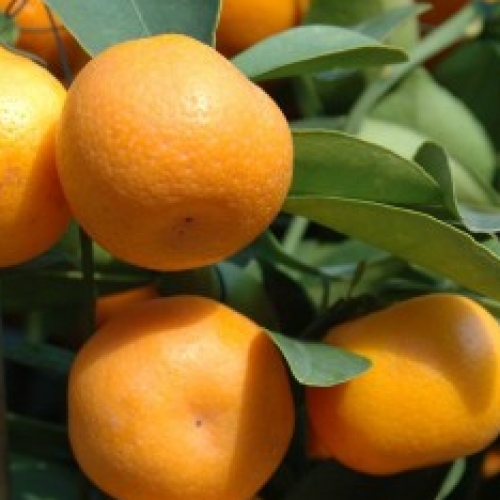
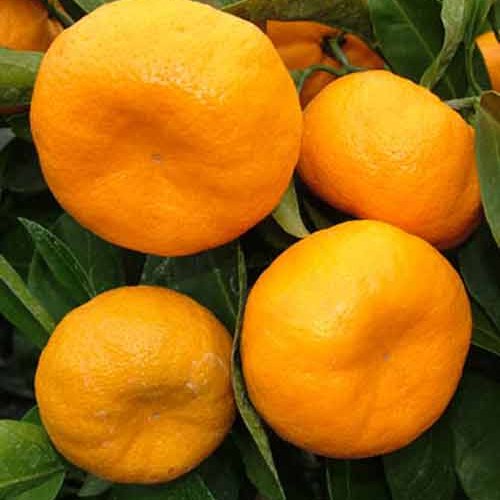
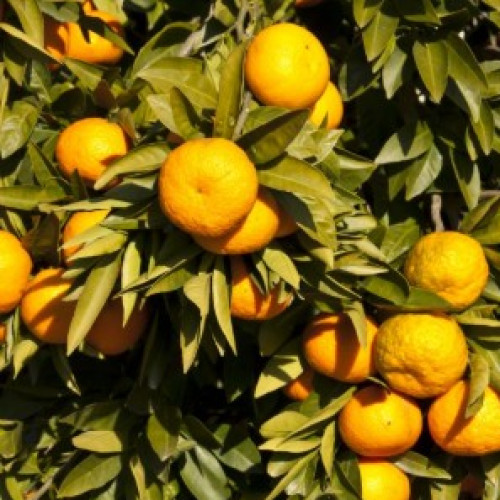
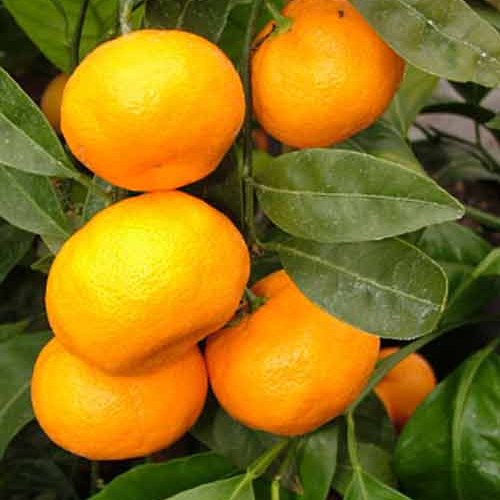
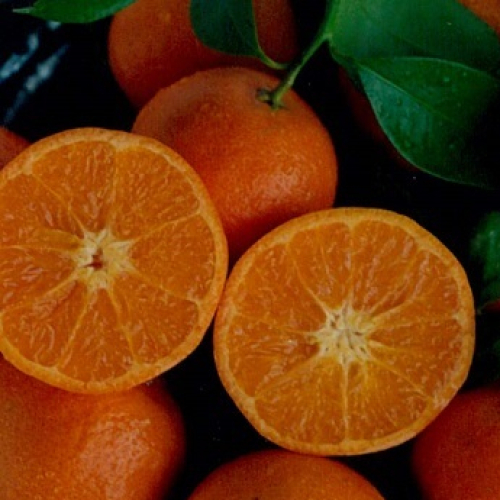
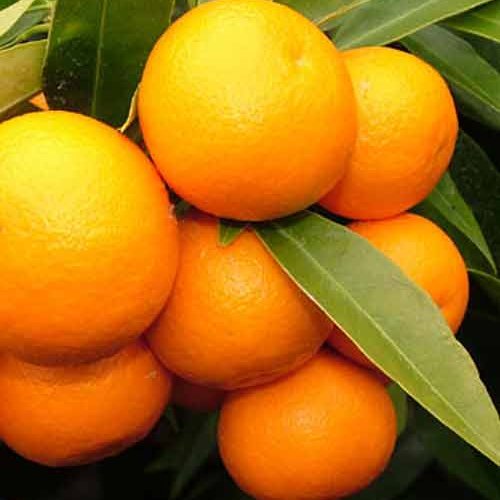
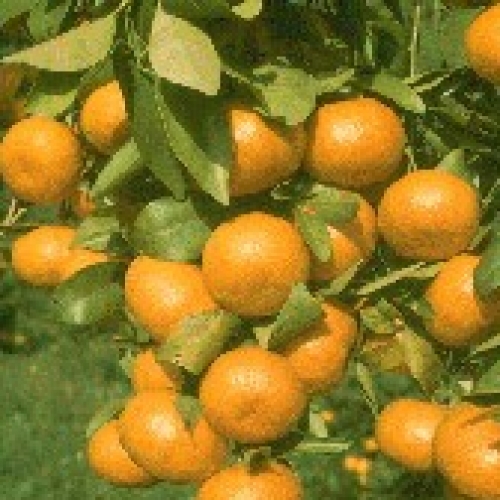
If you are a mandarin fan like me you will want to maximise the time you have fresh fruit available. Clementine varieties are later ripening (June to September) than the Satsuma types (April- May). Later-fruiting varieties include those pictured below:
Berries Galore
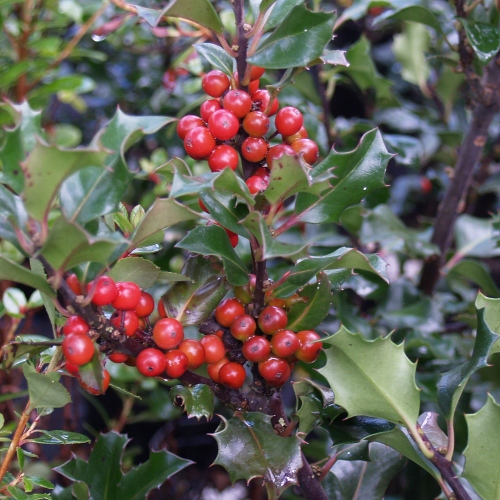
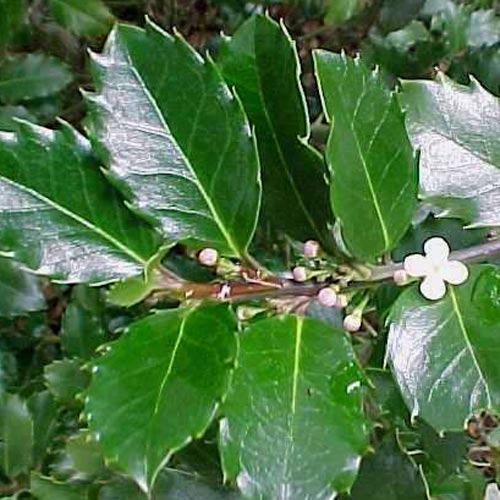
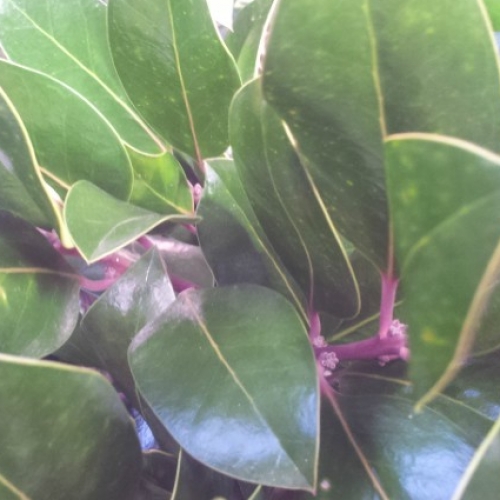
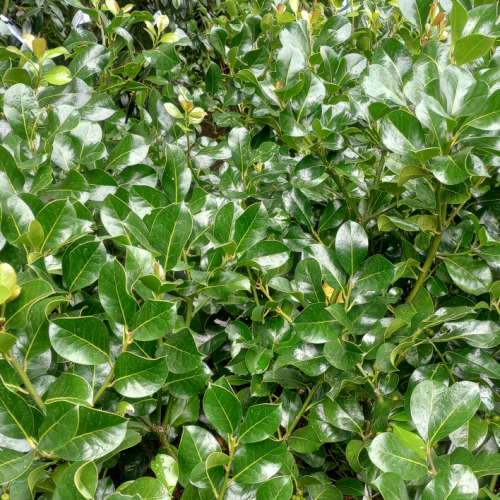
It isn't just fruit edible to humans that are produced at this time of year. Autumn is the time when lots of trees and shrubs produce ornamental berries that are spread by birds, as this timing allows the seed to be dispersed during the mild and usually moist weather. A couple of weeks ago I mentioned our resident wood pigeon (Kereru) was having a lovely time munching on the berries of our Ilex Lago. This holly was developed in New Zealand and boasts deep green, non prickly leaves which are dense and shiny.
We have a number of different types of Holly (Ilex) here at the nursery including our large prickly holly hedge out the front and holly hedges on the driveway. Generally speaking, hollies are dioecious, meaning they have separate male and female plants. In order to get the berries you need at least one of each. For example our Holly Hedge is a female variety called Blue Angel and you must have a male (Blue Prince) within about 100 m for them to produce berries. In the display garden we also have something a bit different which is a hybrid-holly which produces masses of berries on its own. In the plant world it's called being parthenocarpic (able to produce fruit without fertilisation), in the human world lets just say Girl power is alive and well. If you don't have berries on your holly - either you have a male plant or a female plant with no male partner.
Cotoneaster and Viburnum
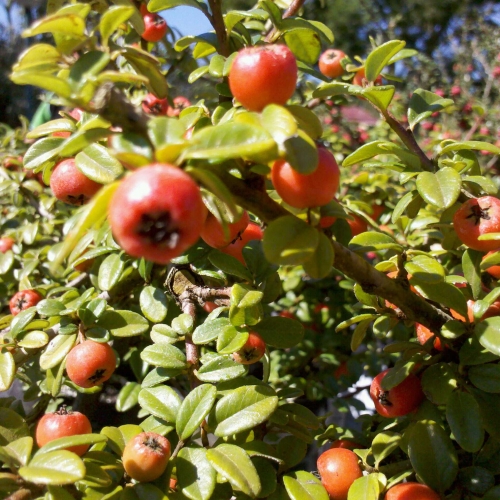
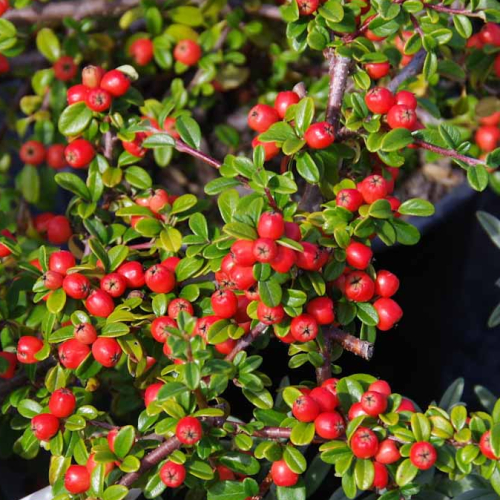
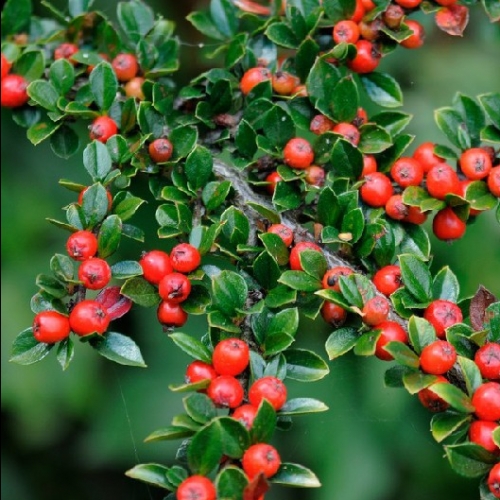
Other berry-producing plants which are fabulous at this time of year include members of the genus Cotoneaster. Cotoneaster Dammeri has small, dark green, glossy leaves that quickly forms a carpet of foliage. Tiny white flowers in spring are followed by bright red fruits that birds love. This is a very hardy plant which tolerates a variety of conditions. Cotoneaster Horizontalis and Royal Beauty are similar in their robustness with Horizontalis bearing tiny pink flowers followed by red berries.
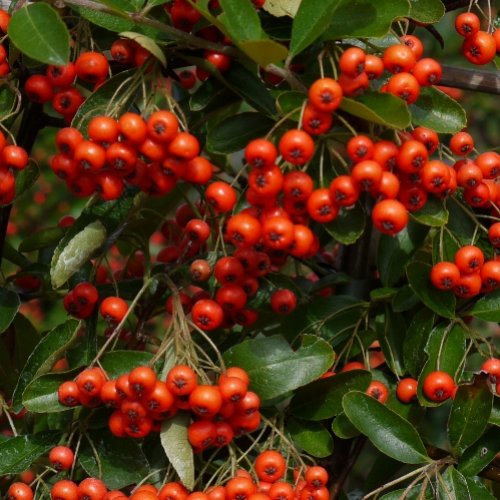
If you're a bit brave you might consider planting a Pyracantha or Firethorn bush. These are prickly little blighters but do produce a spectacular show of autumn berries which are loved by birds. This one is easy to grow in most situations where it does not have wet feet. It's a great thing to plant by a fence if you want to deter intruders - no-one is going to mess with those thorns willingly!
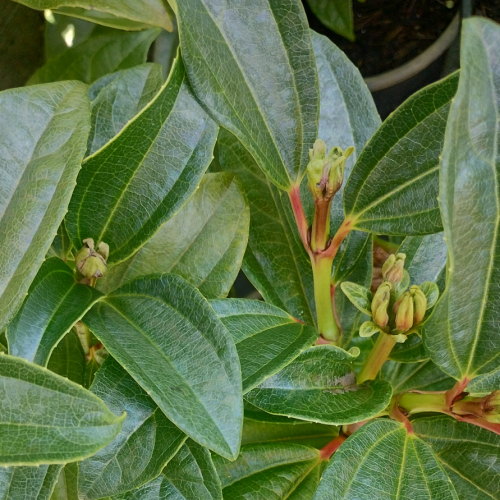
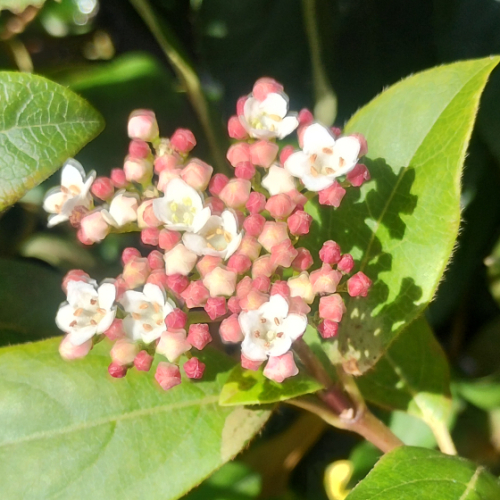
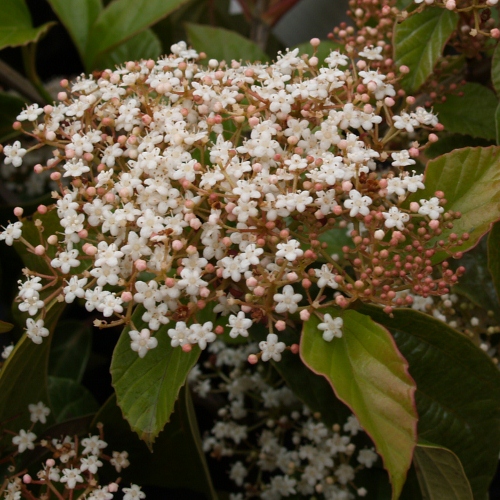
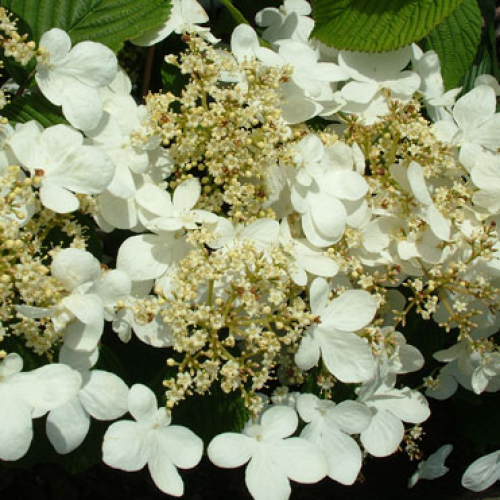
The genus Viburnum contains both evergreen and deciduous varieties. They can also be: dioecious, with male and female flowers on difference plants; monoecious, with separate male and female flowers on the same plant; or, hermaphrodite, with both male (stamen) and female (pistil) parts within the same flowers on the same plant. Note that even if you plant monoecious or hermaphrodite Viburnum varieties, you will probably still get more berries if you plant more than one plant, as they like to be cross pollinated. Who knew Viburnum sex was so complicated!
Viburnum's Viburnum Davidii is an evergreen, dioecious variety, but it's well worth having plants of both sexes to get those gorgeous deep blue berries. Two other evergreen varieties are Viburnum Gwenllian, which is monoecious and has blue berries, and Viburnum Japonicum, a hermaphrodite that has white flowers followed by scarlet berries. For the deciduous shrub-lover check out Viburnum Mariesii which is monoecious and has pretty white flowers in layers followed by red berries which ripen to black.
Mondo Grass/Ophiopogon
You may not think of Mondo grass as producing berries but they do produce cool, deep blue shiny berries which are buried at the base of the leaf. These great little plants are actually not a grass but a member of the asparagus family. They are hardy and grow almost anywhere as they have rhizomes for roots which store water and energy - tolerating dry periods and areas where there isn't very good soil. They are great for edging a border or used to outline pavers in a patio with their distinctive short spiky leaves. There are several types including the unmistakable Black Dragon. Ophiopogon Nana is the tiny short one, Ophiopogon Planiscarpus has broader leaves and Ophiopogon Japonicus has fine green leaves.
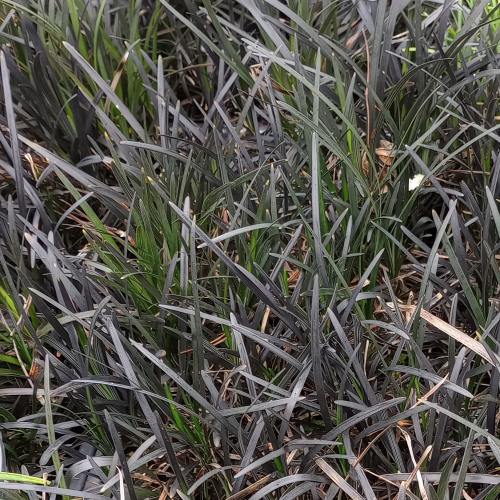
.jpg?t=1777602153 "Ophiopogon Nana (Dwf Mondo Grass)")
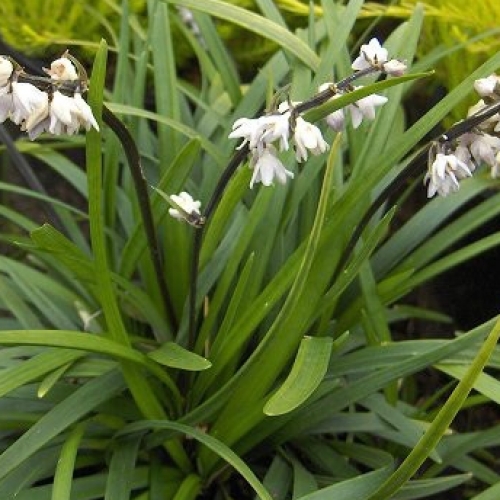
.jpg?t=1777602149 "Ophiopogon Japonicus (Mondo)")
Hope you can enjoy the fabulous autumnal weather we are experiencing and that you find a way to de-stress after your week. Regards Tracy
Cheers from Lloyd, Tony and the Wairere team.
Archived by year 2022 | 2021 | 2020 | 2019 | 2018 | 2017 | 2016 | 2015 | 2014 | 2013 | 2012 | 2011 | 2010 |
2021 Newsletters...
HL Nurseries Limited t/a Wairere Nursery
826 Gordonton Road, R D 1, Hamilton 3281 Ph: (07) 824 3430 Email: