Saturday 21st February, 2026
Hi
Summer? What summer? You would be forgiven for feeling a bit ripped off by the last few months, weather wise, as many in the Waikato, Tauranga, Manawatu and Wellington Regions have had an unusually wet season. Our friends in the South Island have experienced adverse weather events too.
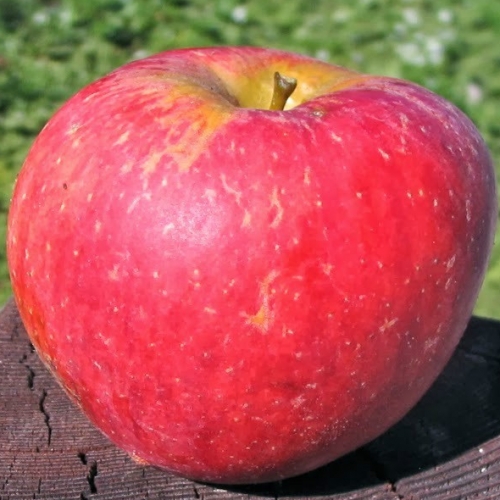
In the plant world there has also been uncertainty and disruption as a friend recently showed me her daphne in flower and I noticed that our espaliered Braeburn apple tree is flowering now too! Crazy times when these plants are supposed to be flowering in spring, not February. I will mention below what plants are NORMALLY doing at this time of year... as towards the end of summer they are usually showing signs of the effects of a few months of warm, dry and windy weather. Perhaps there are some places in New Zealand that experienced that this year??? Also I will talk about plants which LIKE the summer, just so you know for next year. LOL.
Leaf colours herald the change of season
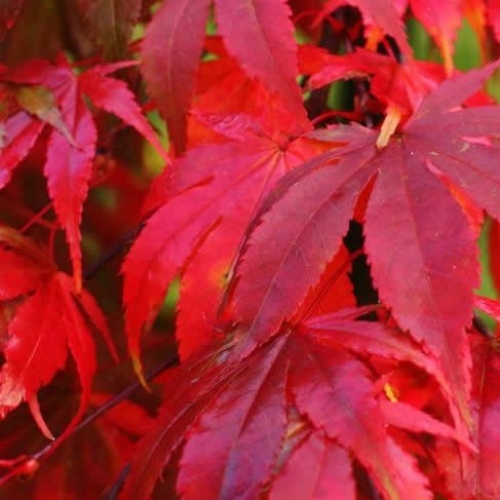
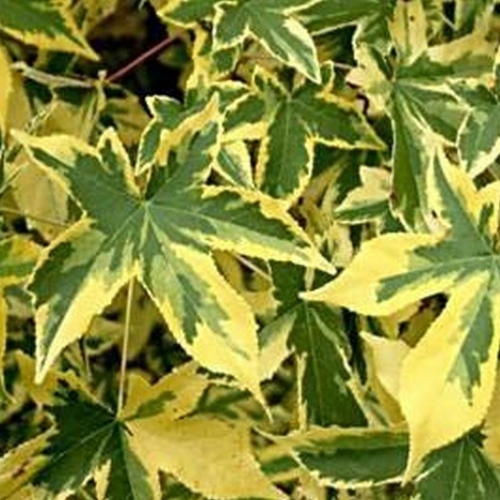
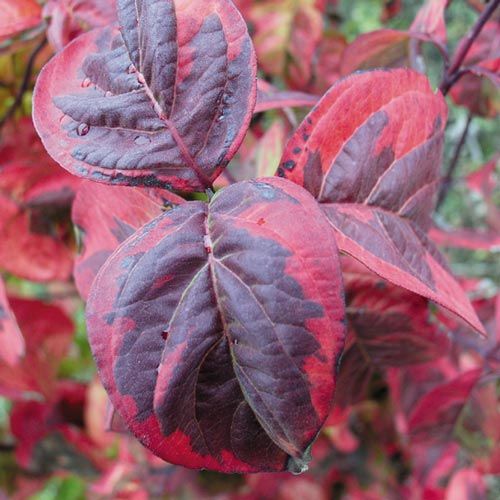
For plants, the leaves are the window of the season's cycle: fresh green shoots in the spring, rich colours in the autumn and (for some) stark bare branches in the winter. Summer is a transition time for leaves as they have done their main job of feeding the plant through the growing season (converting sunlight into sugar for growth). Leaves release water vapour during hot days, cooling the tree and helping move nutrients from roots throughout the plant. As summer days start to shorten (have you noticed how dark it is in the mornings?) and night temperatures drop, the leaves stop producing chlorophyll leading to changes in colour - more yellow, orange and red pigments show through (chlorophyll gives the green colouring or pigment in leaves and is the most abundant pigment).
Deciduous trees at this time are drawing nutrients from the leaves back into the stems to be stored over the winter months. Leaves are being prepared to be shed at the abscission zone - where the top layer of the leaf stem weakens and the bottom layer expands which will allow the tree to seal off the 'wound' where each leaf breaks off. This doesn't happen all at once but gradually so you will notice some yellow and orange leaves on your deciduous trees from mid summer onwards. Unless large parts of your deciduous tree change colour all at once there is nothing to worry about. We feel it... they feel it, the season is changing. The great thing for gardeners is that we are entering one of the best times for planting. As temperatures cool and more regular rain starts (well its debatable if it ever stopped) plants will establish more readily and autumn growth can get underway.
Macadamia
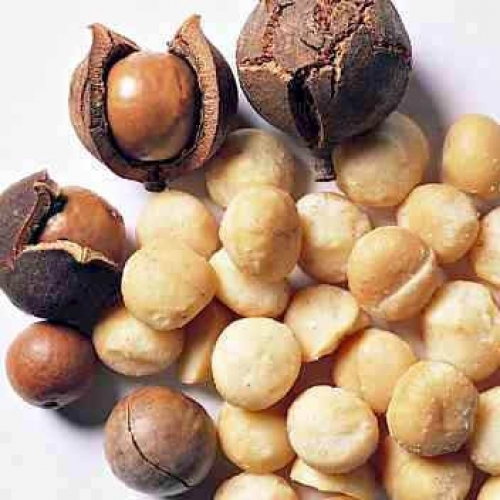
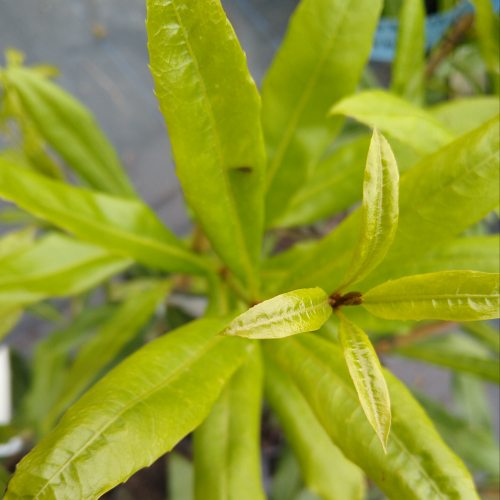
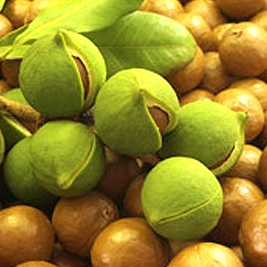
Macadamias' natural habitat is subtropical rainforest, so they will do best in situations which most closely resemble this i.e. warm, with free draining soil and a frost-free climate. They are native to Australia, in particular the north eastern subtropical coastal forest, and were first identified by visiting botanists in 1857. They are one of the plants which have a specialised root system called a proteoid root structure. These root systems, which are also seen on members of the Proteaceae family, look like a mat of dense roots just under the surface. Scientists think this has developed to enable these plants to extract the maximum nutrients from the soil as their natural habitat has soil deficient in phosphorus.
For us gardeners this means we should avoid adding fertiliser which contains phosphorus (the P in N:P:K) as this can have a severe and negative impact on the health of your plant. The equivalent of an upset stomach! Related species are
Banksias and NZ native
Rewarewa which have the same root structure and can be treated in the same way.
There are lots of different varieties of
Macadamia available and the plant breeders lost the plot here when naming them as they have distinctly unsexy names such as
GT201,
TM2 or
H246. This is a way for people that care to figure out where they were bred, e.g. H = Hawaii and A =Australia, or the difference between the two main commercial varieties Macadamia integrifolia (rough shell) and Macadamia tetraphylla (smooth shell). We sell a variety called
Nelmak which was developed in Nelspruit, a city in South Africa, and this is combined with the word for Macadamia in Afrikaans (makadamia) to make the new name. So the numbers and names do mean something, to someone.
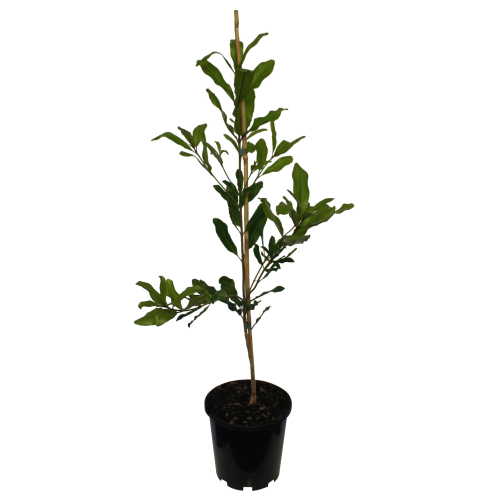
Plant your macadamia where it has plenty of space to grow as they can easily get up to 5-6 metres tall and most fruit better when planted with another pollinating variety. We have more varieties arriving soon.
Strelitzia
The
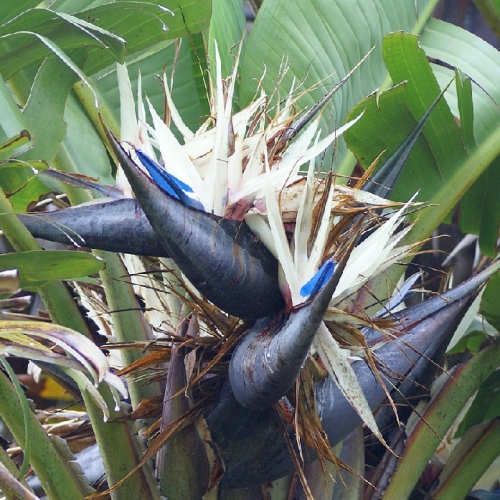
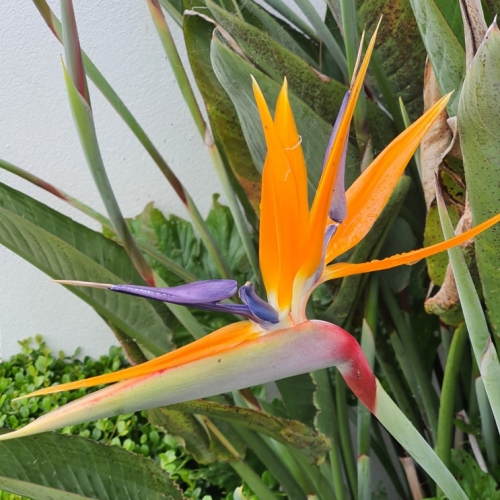
Bird of paradise plant has a specific claim to fame: it's the only known genus to be pollinated by the feet of birds. Yes that's right, apparently sunbirds in Mozambique and other parts of Africa sit on the bract (green bit at the bottom of the flower) and this causes the flower to open up allowing them to drink the nectar. During this process, pollen is transferred to the birds feet and travels with them to the next flower. Here in NZ we sell two varieties - the enormous growing
Strelitzia nicholai, which can grow up to 10m in the wild and has white and blue flowers, and the more placid version called
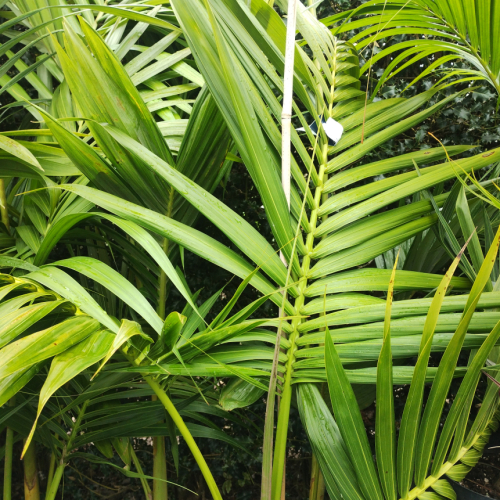
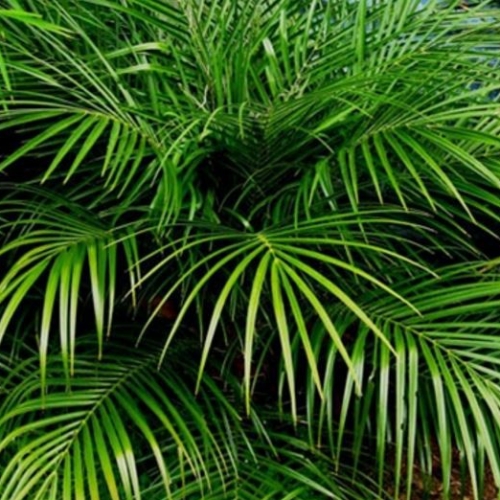
Strelitzia reginae, which has the orange and blue flowers and grows to about 1.5 -2m tall. They love warm sunny spots where they will be sheltered from frost. Team them up with some other sun lovers, such as palms or hibiscus, for a gorgeous tropical look.
New at the Garden Centre
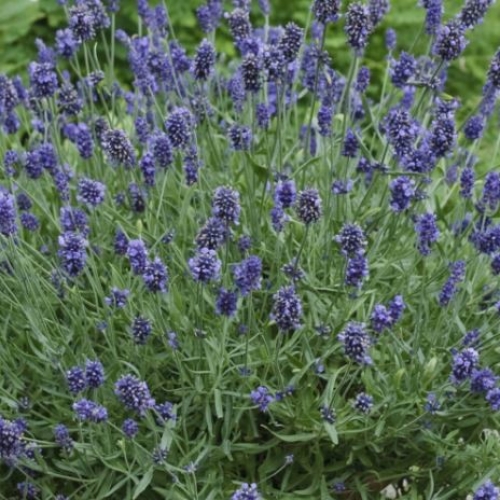
Lavender Sweet Romance: these pretty perennials are great for a hot dry spot or in a pot or planter. They will continue to flower most of the summer, with a regular dead-heading, and provide fragrance and colour when you are enjoying outdoor life (hopefully) on the patio.
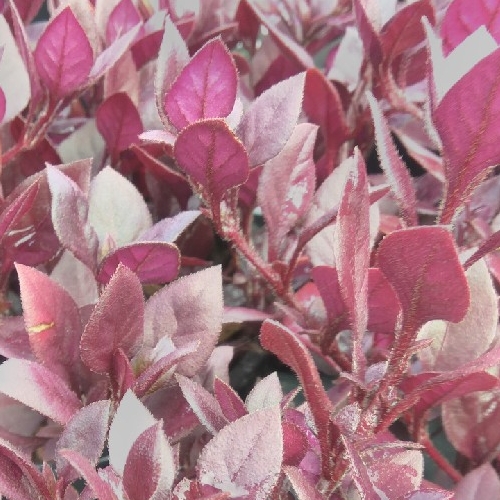
Alternanthera Little Ruby: this striking perennial is often grown as a ground cover or in pots or planters due to its intense purple foliage. Unlike its friends in this section, it prefers to be on the damp side and makes a perfect addition to a tropical garden look.
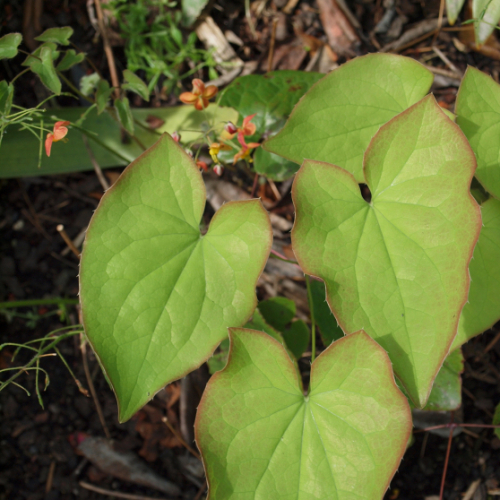
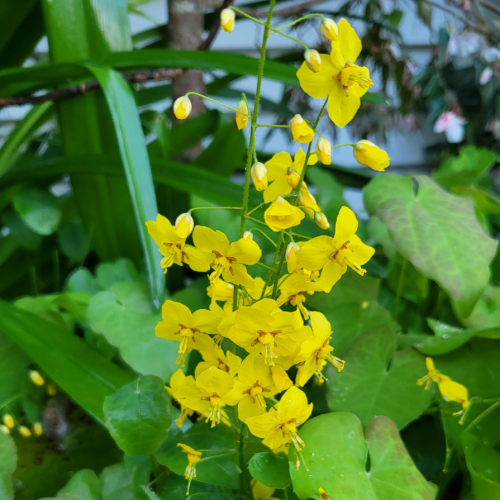
Epimedium have the less than inspiring common name of Barrenwort. Hopefully you can look past that to take a gander these which are brilliant plants for under trees and other hard to populate places where it's shady and dry. The new leaves on these perennials are a pretty bronzy orange and they spread by underground rhizomes. The leaves are heart shaped and mid to dark green and the flowers vary according the species.
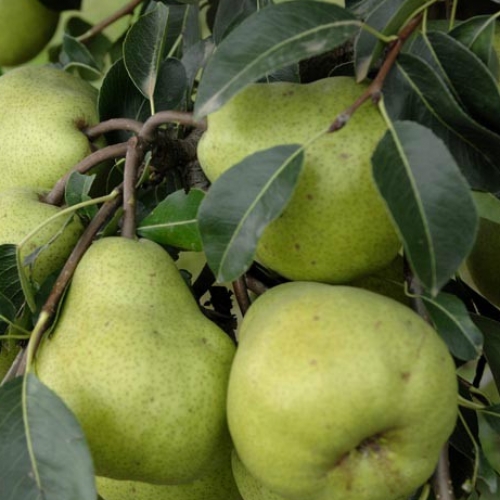
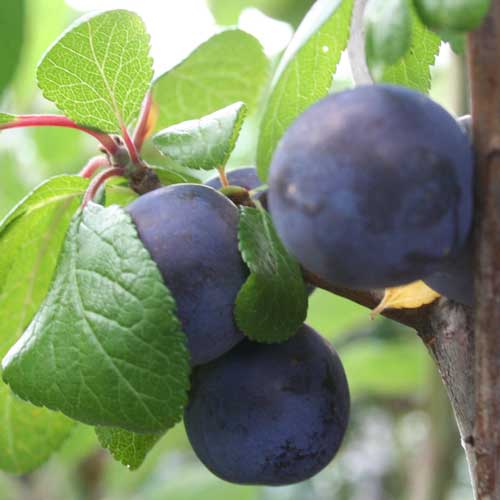
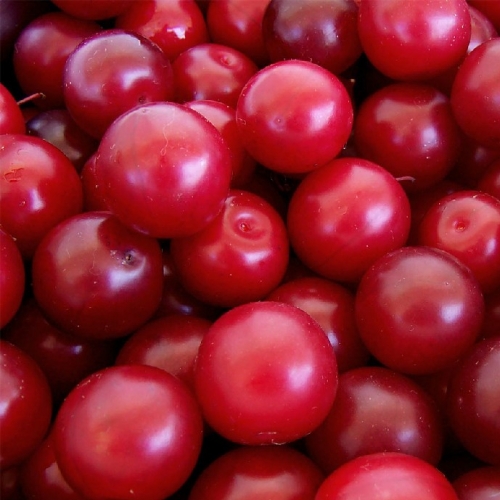
One of the common questions we get at the nursery is "What is the best way to transport plants if you have a trailer?". By far the best way to transport trees in leaf is lying down. This minimises the stress placed on the plant by drag and, as most vehicles are doing 100kmph at some stage when they leave here, that can be substantial. The wind factor greatly increases the water lost by the plant via its leaves as well causing mechanical stress on branches and stems. That's why we advocate lying your trees down - it's the best way. There are still plenty of our fruit trees on special for $40 if you are looking for a bargain to pop in your trailer.
That's it for me now. Here's hoping for a few more balmy days before the autumn really arrives - Regards Tracy.
Cheers from Lloyd, Tony and the Wairere team.
Last 25 Newsletters...