Saturday 6th June, 2026
Hi
It's officially winter, but I don't think the weather gods have got the memo. It's been unseasonably mild with little rain. Perhaps that is all about to change? If so, it will be welcome as a way to bring on plant-dormancy, which is critical before they wake up for spring. In fact, it's one of the benefits of our temperate climate and allows us our highly diverse flora ranging from conifers, which are suited to the freezing conditions in the permanent snow of the Scandinavian hinterland, to deciduous trees and shrubs which have adapted to the cold by shedding their most vulnerable part (their leaves). Of course the trade off for the leaf shed is spectacular colour change in the leaves, which is missing in tropical regions.
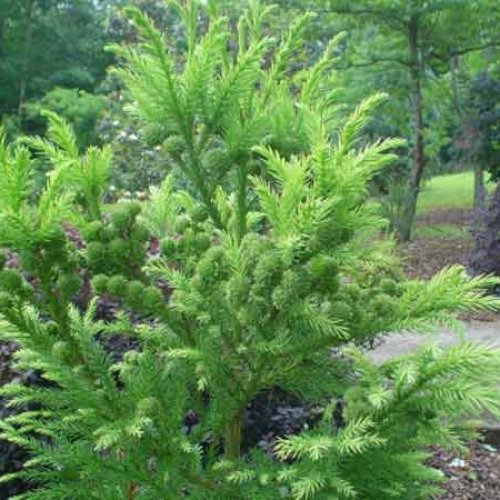
We are even lucky enough to have conifers which change colour AND drop their leaves. These are called Taxodium or Swamp Cypress
and they are
looking amazing in the garden at present.
Taxodium Distichum is a large, upright tree, while
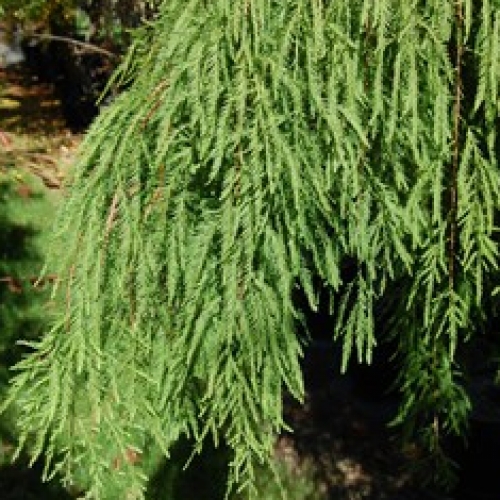
Taxodium McLaren Falls (pictured below) is smaller and weeping in form. As their common name implies, these are far more tolerant of "wet feet" than most other trees.
Taxodium McClaren Falls in our display gardens
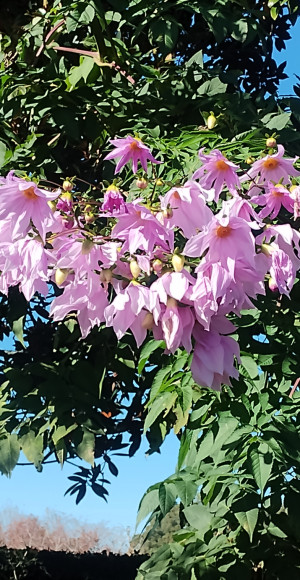
Another adaptation some plants have to survive the cold is storage units underground which can over-winter I recently took a picture of the tree dahlia which is in flower in our front garden. It seems to pop into bloom when literally everything else is finished, adding a flash of colour to a bland landscape of green. An
article by Dr. Keith Hammett about these beauties pointed out that the tree part of the name is a bit of a misnomer because while they do grow huge (3-4 metres) the stems only last for one or possibly two seasons before they need to be cut back.
Dahlia Imperialis is one of the four species of tree dahlias in cultivation and the one pictured here (see below). The flower shape and arrangement are quite different to normal tuberous dahlias, with long pointed purple pink petals on flowers arranged in clusters. It's sterile, so propagation of this plant is by taking root cuttings of the enormous root system. It's not something you are likely to see for sale in a nursery as it is a difficult plant to present, given its size and the limited amount of time when it is looking its best. I was interested to read this in Dr. Hammetts article: "All the tree dahlia species have 32 chromosomes, while the hybrid garden dahlia has 64, which explains why numerous attempts to put more colours into Dahlia Imperialis by crossing with garden dahlias have failed." Families! There is usually one who rocks the boat or is the round one in the square hole.
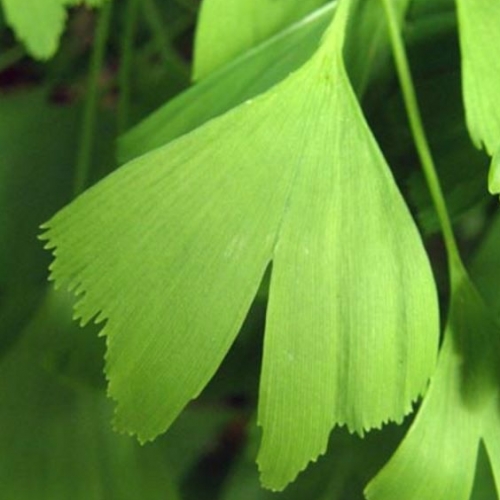
Ginkgo Autumn Glory as seen from the potting shed, Dahlia Imperialis in our front garden
Most of the leaves in the nursery are gone now, with the leaf blowers getting a rest for the next few months. After a couple of good autumn blows you can see the outline of the gorgeous deciduous tree skeletons. One of the benefits of growing
Deciduous Trees is that they allow plenty of light in when it's in short supply. While we are anticipating our new season's trees in July, we still have good stocks of some of the autumn favourites. Check out these for great autumn/early winter colour:
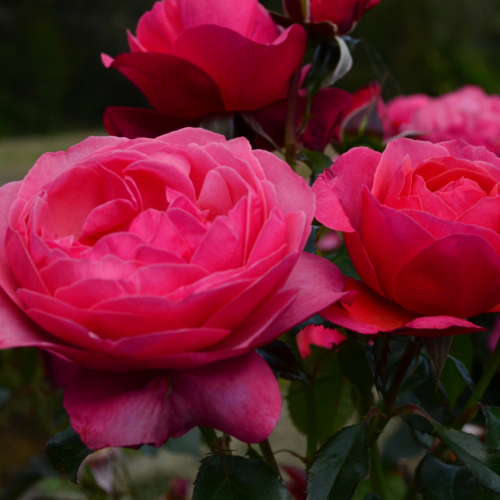
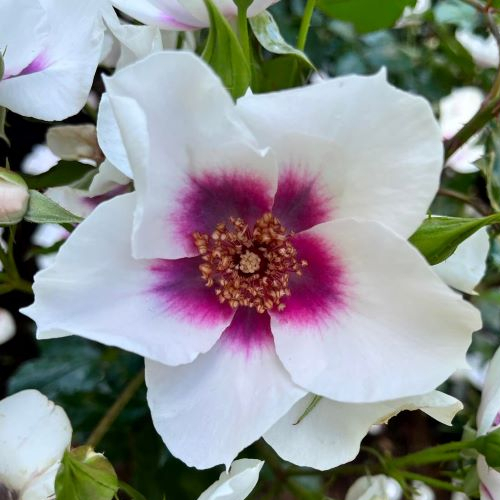
French Connection Rose
French Connection is a gorgeous new variety from master rose breeder Rob Somerfield of Glen Avon roses. This variety is exclusive to Wairere this year. Its main claim-to-fame, apart form being a breath-taking colour, is that it's the healthiest rose Rob has bred to date (and that's saying something!). His roses include favourites such as
Blackberry Nip,
Skyla,
Grandma's rose,
Jack Frost,
Green with Envy,
White Romance,
Fireball,
Feeling better,
Lemon n Lime and
Little Miss Perfect and the list goes on and on.
French Connection is a gorgeous crisp pink with dark green foliage and has a light fragrance. It grows just over a metre high, so it's a delightful compact variety which would be perfect in a large pot.
We have managed to secure some additional stock as Rob got a bit carried away with propagating; so there are enough to go around at present. Having said that, we are the only nursery in the country to have this rose in 2026, so if you want to get it call in, give us a ring or shop online. Rob's breeding programme centres around producing roses which are healthy and require little spraying. A discussion in the potting shed this morning had us all agreeing that spraying is our least favourite activity when it comes to roses, and the less we have to do it the better. Having grown
Little Miss Perfect,
Mulberry Wine and
Old Friends last year I can testify that these roses are very strong and disease resistant. It's the usual story - I'm a gardener who never has time for gardening at my house - so they have to thrive on neglect a bit.
Acacia Limelight
You know how in some families you wonder where the genetics took a left turn and churned out a cousin who looks nothing like the rellys? That's what
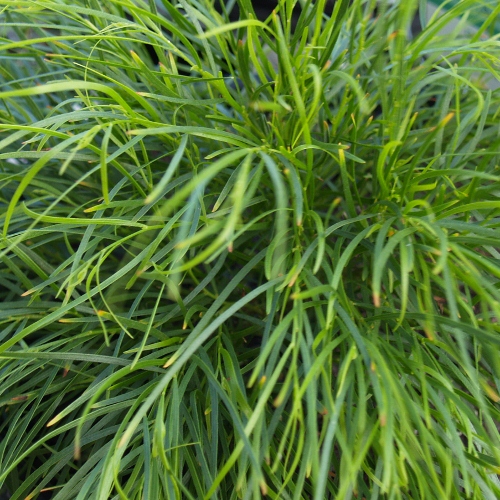
Acacia limelight makes me think of because it does not even slightly resemble the other tree forms of acacia or wattle - not even close. And that's not necessarily a bad thing - no insult intended to the fluffy yellow-flowered forms. This little number has cascading branches of soft green with long narrow leaves and is compact and easy to grow. In 7-10 years you can expect them to become about 80cm tall x 1m wide. Perfect for a pot or planted in a row along a path, they give an elegant and graceful air to any garden position.
This plant is super popular and our supplier has started to grow them in different sizes so that you can get an instant effect. That is, if you are not the sort who likes to wait for the end result then you can cut to the chase by buying a larger plant. These are available at present in
2.4l, 4.5l and 6l pots.
While we are on the subject of wattles I will mention the rest of the family, as we stock some of the "normal" relatives as well as the black sheep.
Acacia Baileyana is a popular evergreen tree with attractive, feathery blue green foliage. There is also a form called
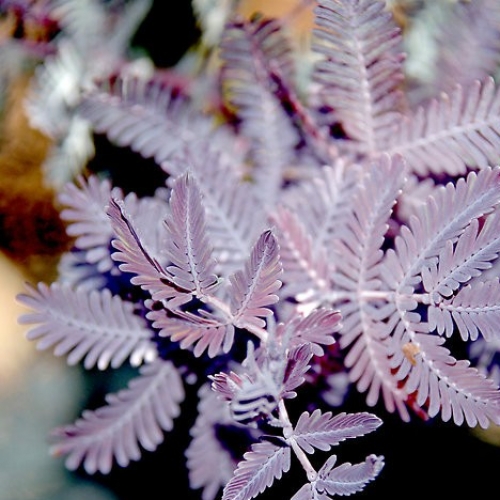
Acacia Baileyana Purpurea which has the same leaf and plant shape but attractive smoky purple tones on the new growth. In winter, both of these varieties become covered in cheerful bright yellow balls of bloom. This is a great source of food for birds and bees during the relatively barren late winter months. Plant in well-drained soil in a sunny spot. This guy is a good friend to have as it belongs to the legume family who fix nitrogen into the soil from the atmosphere; they will enrich even very poor soil.
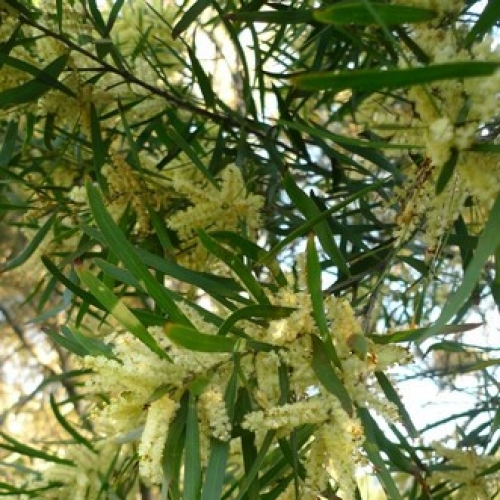
Acacia Floribunda has lots of different common names because it is quite unusual and hard to describe. It is a really dinkum Aussie battler because it has ditched its leaves and instead does its photosynthesising using flattened leaf stalks or phyllodes. These usually grow vertically, rather than horizontally, and are a way that the plant has adapted to hot dry conditions to limit the exposure to the sun and reduce water loss. Another along this line is
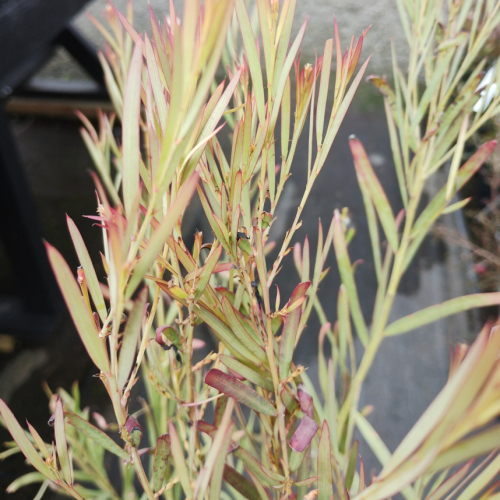
Acacia Iteaphylla (itea means willow and phylla means leaf). With these narrow weeping blue/green leaves they are great at withstanding dry conditions and have a beautiful weeping shape. These last ones will be arriving sometime in the next month or so.
Don't forget about the
Camarosa Strawberry plants. There's a limited time to access these as bare rooted plants suitable for planting immediately. These come to you as a tidy bundle of 10 plants for $16.99. Or, if you are not quite ready, you can buy them now, spread them out in your vege garden with the roots covered and then plant them in the next few weeks. One more week and we will start potting them up as individual plants, which bumps up the price (labour+ pot+ potting mix), although I'm sure we will still be the best value in town. Imagine the juice dripping down your chin from those succulent strawberries! These short day varieties are best planted now to activate in time for spring. P.S. the price per plant is likely to be north of $4, so its a substantial saving to get them now.







-Bag.jpg?t=1780621259 "Compost 40L (Daltons) Bag")