Saturday 22nd August, 2026
Hi
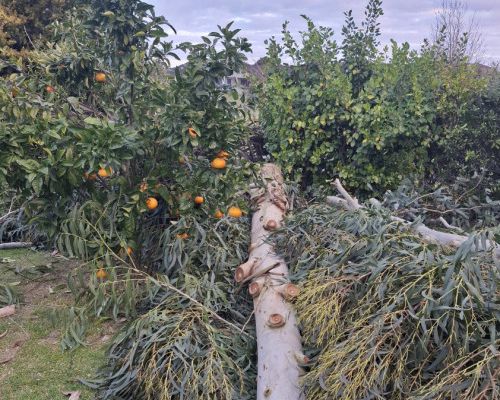
This week we had an arborist come and remove some large trees on our property which had passed their use-by-date. They were showing signs of disease (Gleditsia, Melia, Cherry) and/or getting too tall for the situation (Eucalypts). I was relieved to come home and find my house and garden intact as these trees are probably in excess of 500 to 1000 kg and could potentially do a lot of damage if not felled correctly. I'm sure our neighbours were also happy when I let them know the ones on our shared boundary would be taken care of. This is where you call the experts. An expert landed the massive tree 30 cm away from my fully laden grapefruit without damaging a leaf. Whew.
Grapefruit tree's narrow escape from professionally felled Eucalypt (gum tree)
Speaking of experts, there is a lot of skill involved in aspects of horticulture that many of us take for granted. 90% of our
Deciduous Trees, and all of our
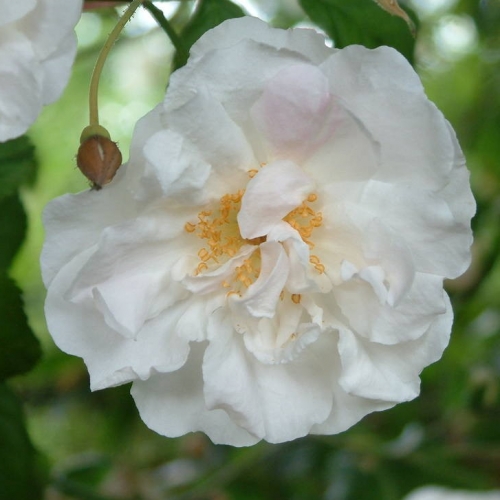
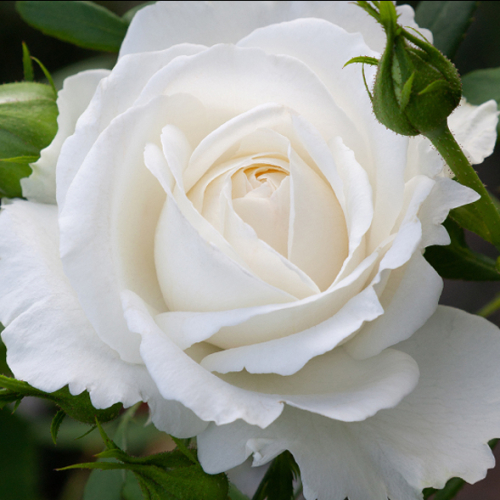
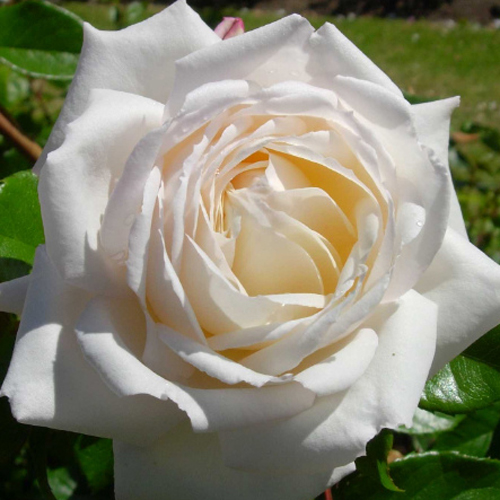
Roses, are grafted. This is a skill which involves technical and hands-on expertise to select bud wood at the correct time, harvest and store it, prepare root stock which are of good quality and free of disease and join the two. Experts are required to root prune and lift the trees or roses, bundle them and label them correctly, so that the customers receive what they ordered, and get them to us without the roots drying out.
Finally, you get the expertise that is here at Wairere when you come to buy. You can find what you're looking for because we have laid the nursery out to make it easier to locate your desired plant, you can ask an staff member to point you in the direction of a
Plum or
Pear,
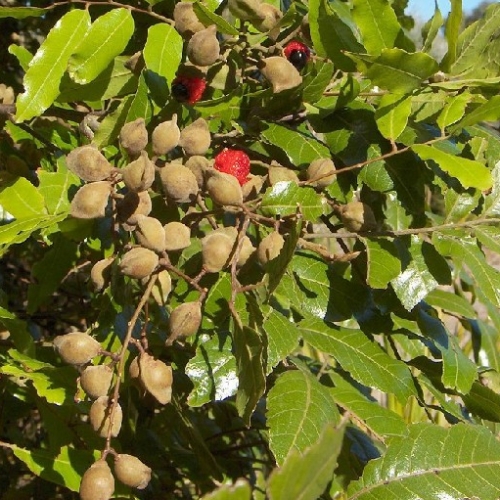
Idesia or
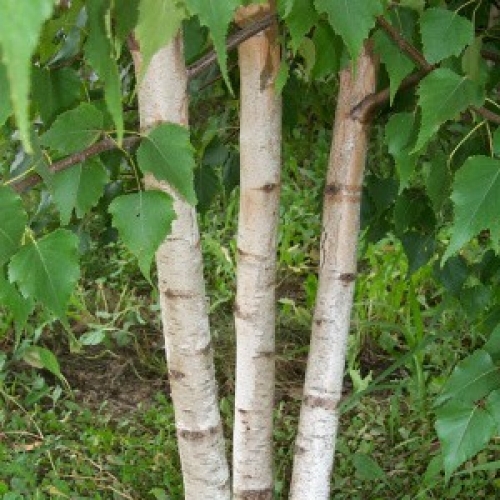
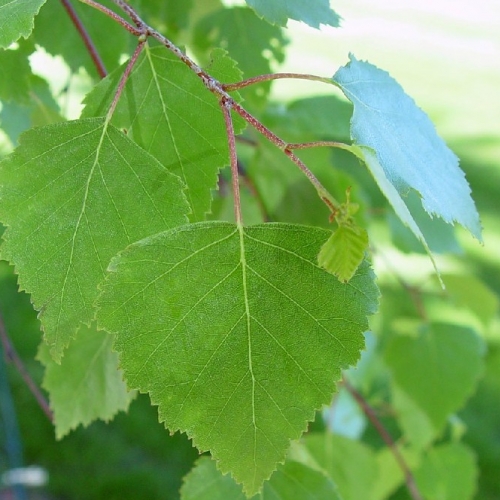
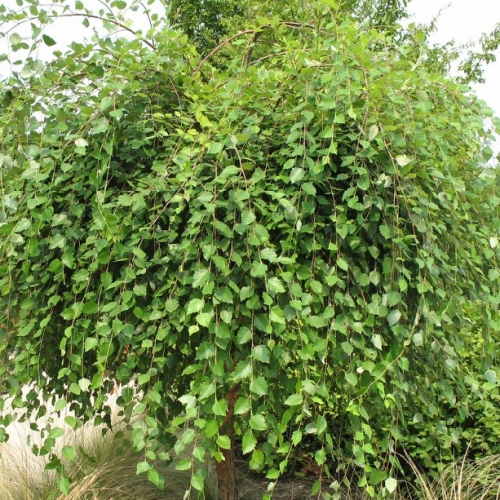
Birch and they can tell the which is which from looking at a bunch of sticks. Our specialist rose team care for, space, prune and spray the
Roses so that they stay healthy and ready for your garden. Our staff can suggest, at the drop of a hat, a suitable
Ground Cover for a sunny bank, three
Climbing White Roses for a feature archway or a couple of options for
small growing deciduous trees for a courtyard.
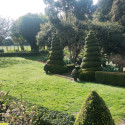
You can also stroll through the display garden which is designed by our master landscapers, Tony and Lloyd, and crafted by our gardeners. If you have seen the impressive cloud pruned
Kaizukas at the entrance, or looked along the razor sharp hedge line, you know our gardeners are authorities too. No Chat GPT around here that's for sure! Come and make the most of the knowledge and skill that is found here - for free!
Birches
This week we received in a fresh batch of
Birch Dazzler which we are potting up.
Birches are often called a pioneer species as they are one of the first trees which would have started to grow once the glaciers from the ice ages receded. In Europe they are also one of the first deciduous trees to come into leaf, so they would have been a herald of spring, which we are certainly starting to see the signs of around here too. There is a lot of ancient mythology of Celtic origins in the birch too as it was used in festivals to celebrate spring, for example to honour the Anglo Saxon Goddess of Spring Eostre (from where we get Easter). Beithe (pronounced ‘bey’) is the Gaelic word for birch and this is a feature of some Scottish and northern English place names such as Glen an Beithe or Birkenhead.
The bright white bark of birch trees has its origins in a chemical called Betulin which helps the tree reflect sunlight in Winter so that the trees' cells don't heat up too much during the day, only to get very cold at night; a cycle which can damage the trees (it's better if they just stay cold). The bark also contains resin which means it burns easily even when wet and also gives it a waterproof quality. For us, the aesthetics of these beautiful silver white trees is best enjoyed when they are planted in a group or grove. At the Taranaki festival last year I saw a group of these planted at the entrance of Riverlea, a gorgeous garden near Bellblock. With fairy lights to outline the bark they are magical at night too. We have a range of birches in stock. Note that the trees have brown bark when young; the white colour develops when they are older and start producing Betulin.
New at the Nursery
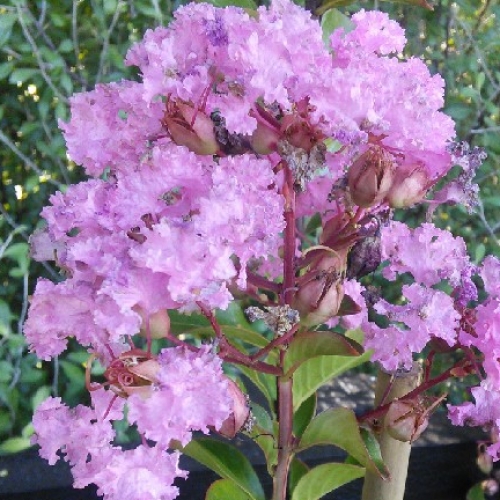
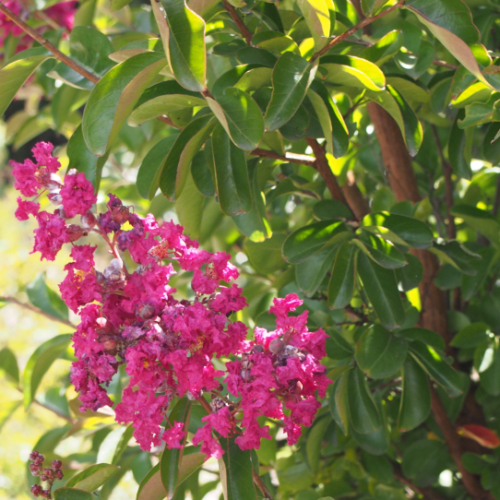
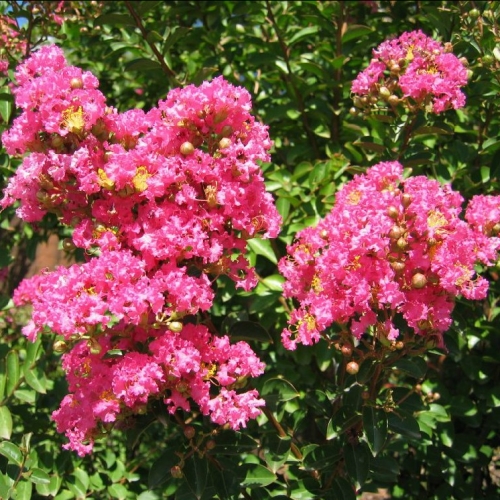
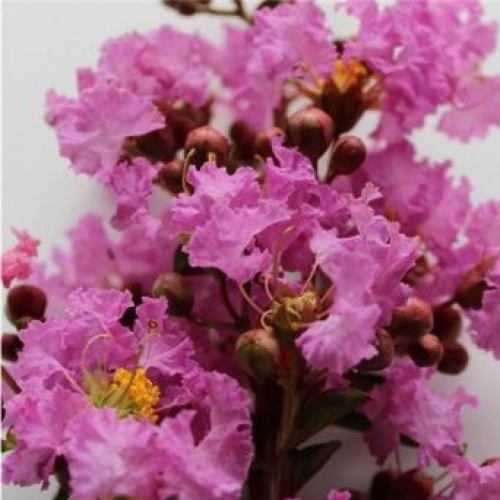
Lagerstroemia/Crepe Myrtle
If feature bark is what you are after, as described for the birches above, then consider planting a
Lagerstroemia in your garden. These amazing plants are versatile in that they can be used as a hedge or screen, a shrub or a small tree. In fact they were serious contenders when we were considering a replacement for our
Awanui Cherries in the nursery. The bark is smooth and peels as it ages creating a interesting array of colour as you get the older bits peeling off and the young bits with varying shades of red, cream, pink, and brown. Add to that the vibrant coloured flowers in late summer and you have a winning combination. Flowers are crinkly, like scrunched up crepe paper, and usually in shades of bright pink, purple, red or white.
Titoki and other Big Specimens
Recently we visited the annual Horticultural Trade Day where we we able to see the wares of growers from all over New Zealand. We spotted some cool stuff and this week these are here including some large grade
Titokis. These native trees are a great choice for the average to large garden as they grow to about 7-10 metres tall. They have large, glossy, light green dissected foliage with sprays of rusty red woolly flowers in summer followed by scarlet berries with jet black seeds. The plants we have just received are around 2-3 m tall and would definitely be in the category of PICK UP or TRUCK DELIVERY only. You will note on our website under our
Terms of Sale, and on many of the taller trees, that we can only send by courier plants under a certain height, weight and breadth. Please ring or email the office enquiries@wairere.co.nz if you ever need more information before purchasing. Also in this shipment are some very impressive
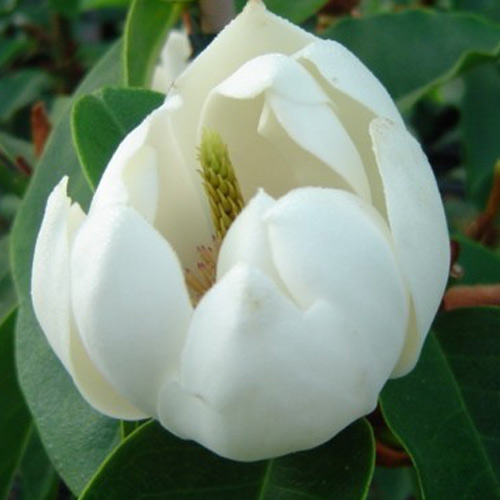
Michelia Bubbles and some cool
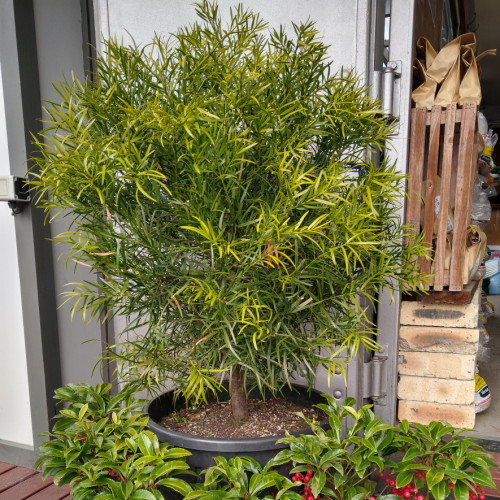
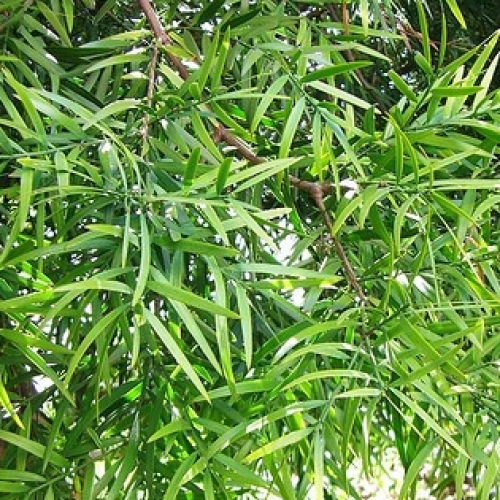
Podocarpus Gracilior shaped into balls.
Grapes
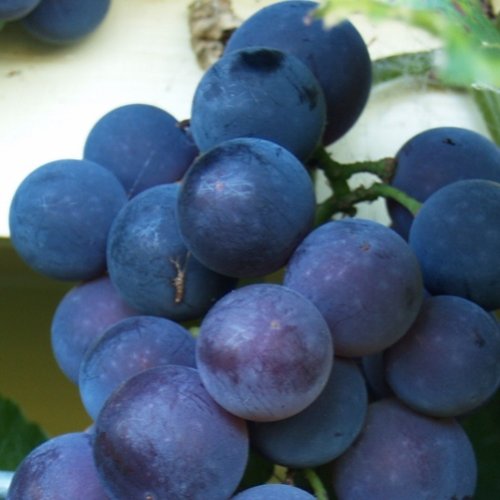
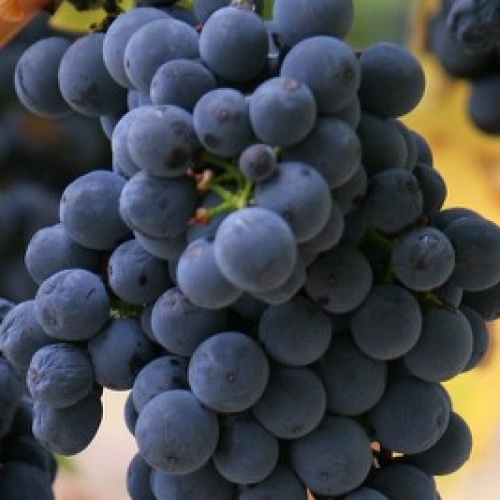
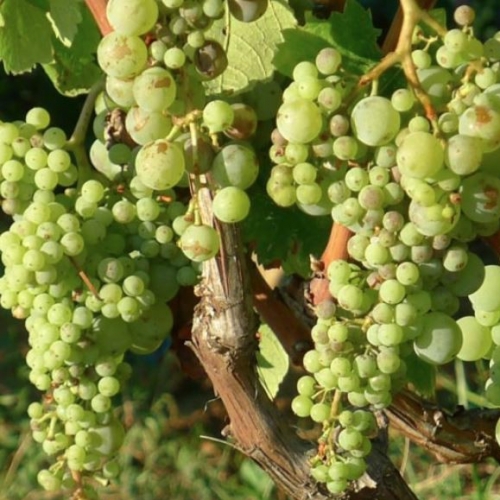
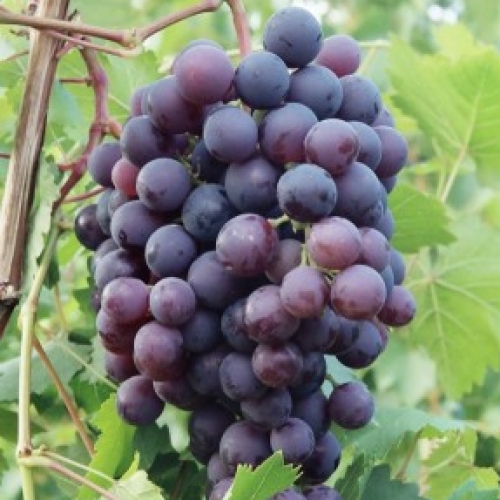
We have seen a change to the traditional grape-growing areas around NZ as more areas are investing in vineyards. The key requirements for growing
Grapes are a sunny position, preferably away from strong winds and sheltered from early frost, with excellent drainage. If you have seen the vineyards in Marlborough and Gisborne you will note rocky, dry looking
terra firma which grapes love. If you are going to channel your inner Tuscan peasant, you will want to establish your grape on a fence or some wires where you can train it and prune easily. Pruning is one of the key tasks with grapes as you need to prune in winter, when dormant, to two buds from the main leader. In winter you need to keep your grape in check, as it has a tendency to run riot if left, and remove leafy runners to allow more light into the bunches to allow them to ripen. Of course the birds will want to sample your treats, so keep them covered with bird netting and remember to water in summer and feed with a small amount of general garden fertiliser - not too much or all you will get are heaps of leaves.
SPRING... is coming
With a teaser of some warmer days we all know spring is just around the corner. Now is the time to do some preparation by checking out your garden and planning where and what you want to alter or add. With deciduous trees and shrubs looking bare you will be able to see which spaces need filling or improving. Trees and shrubs form the scaffolding to build your garden shape and can help you create continuity from one area to the next. Come and have a look at our range, chat to our staff and get inspiration from our display garden.
Thanks for reading. Have a great weekend, regards Tracy.
Cheers from Lloyd, Tony and the Wairere Team.
Last 25 Newsletters...